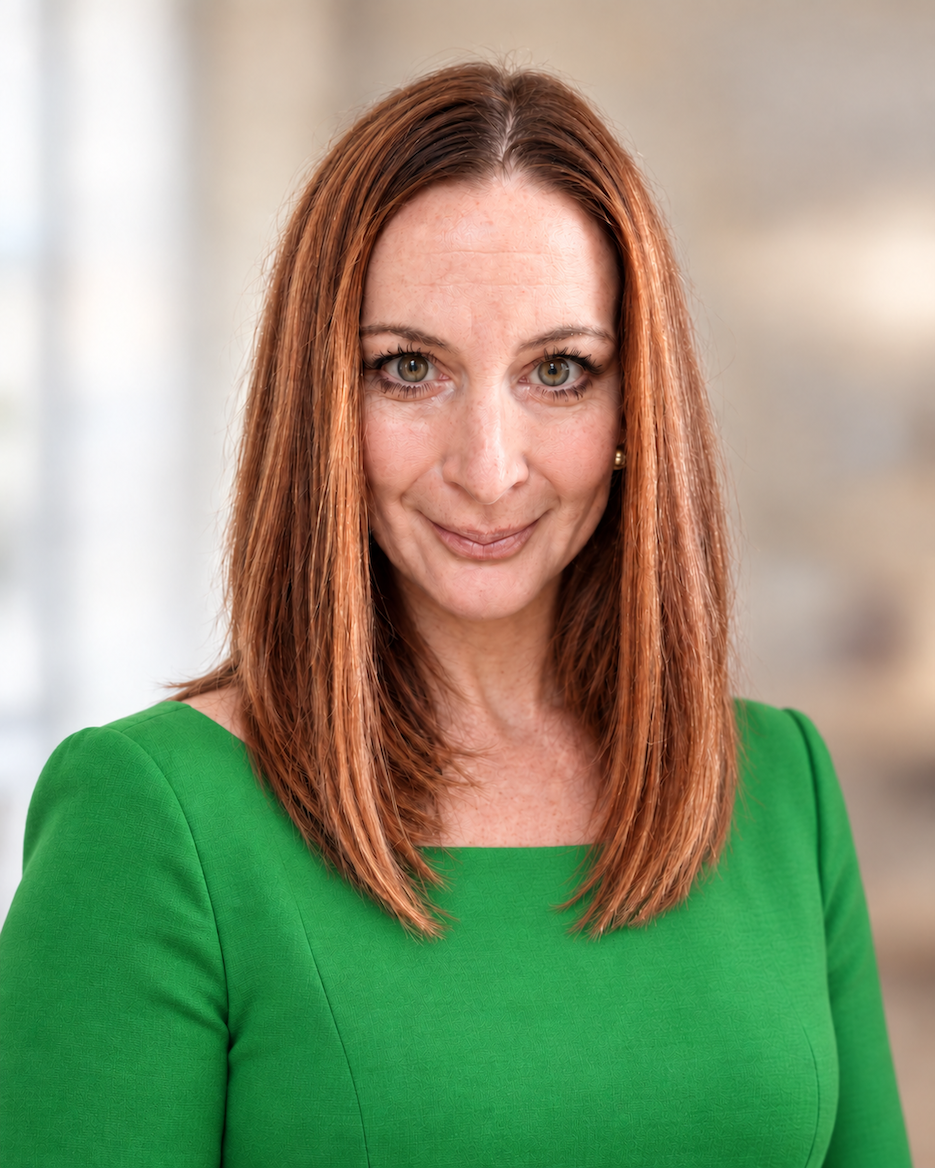
Barbora Holá is Professor of Empirical Legal Studies of International Criminal Justice at Vrije Universiteit Amsterdam and Senior Researcher at the Netherlands Institute for the Study of Crime and Law Enforcement (NSCR). She obtained her PhD from Vrije Universiteit Amsterdam in 2012 with a dissertation on sentencing at the ICTY and ICTR. She is Programme Director of the Master’s programme International Crimes, Conflict and Criminology and a board member of the Center for International Criminal Justice. Alongside her academic career, she worked with a defence team at the ICTY and as a Visiting Professional at the International Criminal Court. She has held visiting positions at UC Berkeley, Griffith University, Washington and Lee University and the University of Sarajevo. From 2018 to 2023, she was a member of De Jonge Akademie of the Royal Netherlands Academy of Arts and Sciences. Her scholarship has been cited by the ICC. Her expertise lies in the empirical and interdisciplinary study of international criminal justice, transitional justice and the legacies of mass atrocities.
prof. dr. Barbora Hola, LLM
What happens when societies try to address mass atrocities through trials, punishment and other forms of justice? Do these interventions help individuals and communities recover, or can their consequences be more complicated than policymakers and legal institutions assume? These questions are at the heart of Barbora Holá’s research.
Her current work examines the human dimensions and longer-term effects of international criminal justice and transitional justice. One strand investigates how responses to mass atrocities affect not only those directly involved, but also their children and subsequent generations. She studies how experiences of violence, punishment, stigma, silence and contested memories are transmitted within families and communities, and how transitional justice may shape these processes.
A second strand focuses on the people and practices behind international criminal proceedings. This includes research on actors who are often overlooked when speaking about international criminal justice, including the experiences of defendants and other courtroom and "beyond courtroom" actors, sentencing practices, and the rehabilitation and reintegration of people convicted of international crimes. She is particularly interested in aspects of justice that conventional legal analysis tends to neglect: lived experience, informal relationships and the gap between institutional assumptions and what justice actually does in people’s lives.
Her research combines insights and methods from criminology, law, psychology, sociology and transitional justice. It includes quantitative analyses of judicial decisions, surveys, interviews, courtroom observation and archival research. Geographically, her work has addressed the former Yugoslavia, Rwanda, Colombia, Czechia and other post-conflict and post-authoritarian societies.
Her research has attracted substantial competitive funding. She has successfully secured several grants from the Dutch Research Council (NWO), including Veni and Vidi grants, a WISE fellowship and two Research Talent grants. These grants have enabled her and her colleagues to develop a sustained research programme on the operation, consequences and human dimensions of international criminal and transitional justice.
Barbora teaches and supervises students at master’s and doctoral level. Her teaching profile is interdisciplinary, bringing together criminology, law, psychology and socio-legal research to examine mass atrocities, conflict and the different ways societies respond to them.
As Programme Director of the Master’s programme International Crimes, Conflict and Criminology, she is responsible for the programme’s academic direction, coherence and continuing development. She has contributed to educational innovation involving interdisciplinary learning, research-led teaching, assessment design and the responsible use of artificial intelligence in higher education. Her teaching encourages students to move between legal rules, empirical evidence and the lived realities of people affected by violence and justice, and to question assumptions that may otherwise remain hidden.
- NIAS Lorentz Center | Leiden | Bestuurder | 2023-01-01 - present
- NSCR | Amsterdam | Medewerker | 2017-04-01 - present
Ancillary activities are updated daily