Education Research Current About VU Amsterdam NL
Login as
Prospective student Student Employee
Bachelor Master VU for Professionals
Exchange programme VU Amsterdam Summer School Honours programme VU-NT2 Semester in Amsterdam
PhD at VU Amsterdam Research highlights Prizes and distinctions
Research institutes Our scientists Research Impact Support Portal Creating impact
News Events calendar Biodiversity at VU Amsterdam
Israël and Palestinian regions Culture on campus
Practical matters Mission and core values Entrepreneurship on VU Campus
Governance Partnerships Alumni University Library Working at VU Amsterdam
Sorry! De informatie die je zoekt, is enkel beschikbaar in het Engels.
This programme is saved in My Study Choice.
Something went wrong with processing the request.

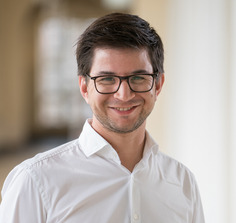
Prof. dr. Chase Broedersz

Department of Physics and Astronomy
Prof. dr. Chase Broedersz studies the theoretical physics of life

Biography


Group Page:
https://broederszgroup.com/ 

Chase Broedersz received his PhD cum laude from Vrije Universiteit Amsterdam in 2011, focusing on the mechanics and dynamics of biopolymer networks. He then joined Princeton University as a Lewis-Sigler Fellow, where he conducted independent research on the physics of living systems as an associate research scholar and lecturer.

In 2015, Broedersz established his research group at Ludwig-Maximilians-Universität in Munich, where he was appointed W2-Professor in statistical and biological physics and received tenure in 2020. From 2017 to 2020, he was a member of the Young Academy of the Bavarian Academy of Sciences and Humanities.

In 2020, he returned to Vrije Universiteit Amsterdam as an associate professor. He was awarded a ERC Consolidator Grant in 2023 and, in 2025, was appointed as prestigious University Research Chair Professor. He currently serves as Professor of Theoretical Physics of Life and director of the Physics and Astronomy joint degree BSc program.

Research description

Broedersz's group studies the statistical physics of living systems, ranging from chromosomes to migrating cells and multicellular tissues. We aim to understand the emergent functional dynamics and organization of living systems using a combination of mechanistic and data-driven theoretical approaches grounded in equilibrium and non-equilibrium statistical physics, information theory, and soft condensed matter physics. We develop and apply these approaches in close collaboration with several experimental groups.

Dynamics of cell migration and tissue - The function of many cells depends on their ability to effectively migrate through complex environments. Our goal is to understand the dynamics of how cells overcome such migration challenges. Examples include the squeezing of a cell through a tight constriction, pairs of cells colliding, or the collective migration dynamics of groups of cells on tissues with geometric curvature. Using a combination of data-driven and mechanistic theoretical approaches, we seek simple dynamics laws that describe such confined cell migration.

Chromosome organization and mechanics - Chromosomes carry the information to generate a living cell. In both prokaryotes and eukaryotes, chromosomal DNA is highly compacted to fit inside its cellular confinement. This implies a major organizational problem:  the DNA does not only have to be highly condensed, but its spatial organization must also facilitate processes such as transcription and replication. Using a combination of polymer physics and information theoretical approaches, we aim to understand the functional organization of chromosomes and how this organization changes under force, such as during chromosome segregation.

Non-equilibrium dynamics in living systems - Living systems, such as cells, operate far from thermodynamic equilibrium. One of the key challenges in the field is to measure the “distance from equilibrium” of living systems, often quantified with the entropy production rate, or equivalently the time-irreversibility of the dynamics. In our group we study how various measures of time-irreversibility – accessible in a non-invasive way – encode features of the active driving at work and how they manifest on different spatial scales.

Meet Prof dr. Chase Broedersz

Selected publications 

  • EA Meijering, CF Nielsen, H Witt, J Harju, E Kerklingh, GH Haasnoot, AH Bizard, I Heller, CP Broedersz+, Y Liu, EJ Peterman, ID Hickson, GJL Wuite+, Nonlinear mechanics of human mitotic chromosomes. Nature, 605(7910), pp.545-550 (2022)
  • DB Brückner, M Schmitt, A Fink, G Ladurner, J Flommersfeld, N Arlt, E Hannezo, JO Rädler, and CP Broedersz, Geometry adaptation of protrusion and polarity dynamics in confined cell migration. Physical Review X, 12(3), p.031041 (2022)
  • H Jia, J Flommersfeld, M Heymann, SK Vogel, HG Franquelim, DB Brückner, H Eto, CP Broedersz+, and P Schwille+, 3D printed protein-based robotic structures actuated by molecular motor assemblies. Nature Materials, 21(6), pp.703-709 (2022)
  • JJB Messelink, J Janssen, MCF van Teeseling, M Thanbichler, CP Broedersz, Learning the distribution of single-cell chromosome conformations in bacteria reveals emergent order across genomic scales, Nature Commun 12, 1 (2021)
  • DB Brückner, N Arlt, A Fink, P Ronceray, JO Rädler, CP Broedersz, Learning the dynamics of cell-cell interactions in confined cell migration, Proc Natl Acad Sci USA 118 (7), e2016602118 (2021)
  • F Gnesotto, G Gradziuk, P Ronceray, CP Broedersz, Learning the Non-Equilibrium Dynamics of Brownian Movies, Nature Commun 11, 5387 (2020) 
  • DB Brückner, P Ronceray, and CP Broedersz, Inferring the dynamics of underdamped stochastic systems, Phys Rev Lett 125:058103 (2020)
  • DB Brückner, A Fink, C Schreiber, PJF Röttgermann, JO Rädler, CP Broedersz, Stochastic Nonlinear Dynamics of Confined Cell Migration in Two-State Systems, Nature Physics 15, 595–601 (2019) 
  • F Mura, G Gradziuk, CP Broedersz, Non-equilibrium scaling behavior in driven soft biological assemblies, Phys Rev Lett 121 (3), 038002 (2018)
  • C Battle*, CP Broedersz*, N Fakhri*, VF Geyer, J Howard, CF Schmidt, and FC MacKintosh, Breaking detailed balance at the mesoscale in active biological systems, Science 352, 604-607 (2016)

For a complete list see Chase’s Google scholar page

Teaching

Teaching

Chase Broedersz is the Program Director of the Physics and Astronomy BSc joint degree.

Advanced electrodynamics and special relativity

Statistische fysica 

Theory of Soft and Active Matter (starting 2023/2024)

Do you want to know more?

Visiting address
De Boelelaan 1100
1081 HV Amsterdam

Physics of Living Systems

The experimental and theoretical research in the Physics of Living Systems section explores fundamental biophysical questions from the level of a single molecule to cells and tissue, all the way up to whole organisms and groups of animals.

Quick links

Homepage Culture on campus VU Sports Centre Dashboard

Study

Academic calendar Study guide Timetable Canvas

Featured

VUfonds VU Magazine Ad Valvas Digital accessibility

About VU

Contact us Working at VU Amsterdam Faculties Divisions
Privacy Disclaimer Safety Web Colophon Cookie Settings Web Archive

Copyright © 2026 - Vrije Universiteit Amsterdam