Education Research Current About VU Amsterdam NL
Login as
Prospective student Student Employee
Bachelor Master VU for Professionals
Exchange programme VU Amsterdam Summer School Honours programme VU-NT2 Semester in Amsterdam
PhD at VU Amsterdam Research highlights Prizes and distinctions
Research institutes Our scientists Research Impact Support Portal Creating impact
News Events calendar Biodiversity at VU Amsterdam
Israël and Palestinian regions Culture on campus
Practical matters Mission and core values Entrepreneurship on VU Campus
Organisation Partnerships Alumni University Library Working at VU Amsterdam
Sorry! De informatie die je zoekt, is enkel beschikbaar in het Engels.
This programme is saved in My Study Choice.
Something went wrong with processing the request.

Use of Generative AI in Academia

Generative AI tools and techniques have become ubiquitous in our daily lives and are increasingly integral to research as well. 

Researchers across disciplines leverage these tools in various innovative ways. For instance, generative AI facilitates topic modelling on large datasets, automated thematic analysis, and classification tasks. It also aids in brainstorming new research ideas, summarizing papers and books, and even coding, which is particularly beneficial for researchers in non-technical fields. Furthermore, generative AI enhances data analysis and summarization, enabling researchers to upload a dataset and receive summary statistics, plots, and general insights, thereby streamlining the research process.

This course is tailored for researchers in all disciplines (both technical and non-technical) and at all levels, including research-oriented Master students, PhD students, postdocs, and assistant professors. The idea is that anybody who is eager to explore the transformative potential of Generative AI in their scientific studies is welcome in the course. Students will gain practical experience with cutting-edge generative AI models and techniques, such as GPT, DeepSeek, and Llama.

Students will learn to generate hypotheses, analyse complex datasets, and incorporate these tools into their own experiments. The course will also cover best practices, ethical considerations, and case studies from various scientific fields.

Continue reading below for additional course information.
Fill in the application form

Deadline extended to: 15 December 2025 (23:59 CET)

Stay up to date
Winter courses

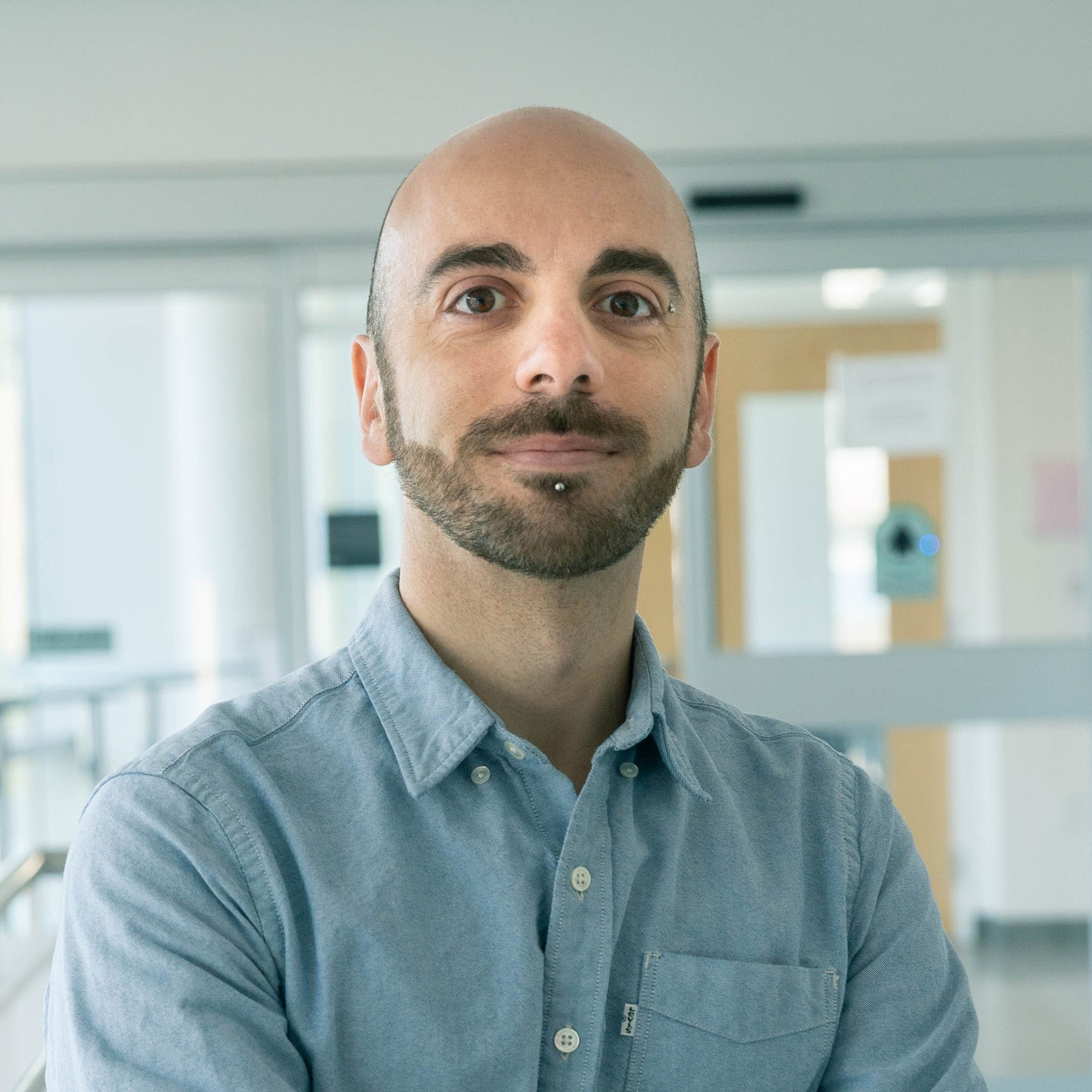
Dr. Ivano Malavolta

Dr. Ivano Malavolta

Malavolta holds (1) the Basiskwalificatie Onderwijs (BKO), recognized by all Dutch universities as proof of the ability to develop and teach university courses and a (2) the Senior Kwalificatie Onderwijs (SKO). Malavolta supervised the final thesis of 129 students (63 Master and 66 Bachelor) and 8 already-graduated PhD students. Malavolta won the 2024 Dutch Prize for ICT Research, funded by the ICT research platform Netherlands (IPN), COMMIT\, and the Royal Holland Society of Sciences and Humanities (KHMW).

Since 2021, Malavolta is the director of the Network Institute, which allowed him to get extensive experience in managing and mentoring interdisciplinary education and research projects involving more than 150 students and 470 researchers from different disciplines.

Learn more

Additional course information

  • Learning objectives

    By the end of this online course, students will be able to:

    • Understand the basics of generative AI tools and techniques
    • Use generative AI tools to speed up their own research activities
    • Integrate generative AI tools in the design of their scientific studies
    • Answer research questions involving generative AI tools and techniques
    • Reflect and act on the ethical considerations of using generative AI tools while doing research
  • Forms of tuition and assessment

    The course will be split into two main phases: in-person activities (week 1) and team-based project (week 2). 

    In the first week, students will have a lecture in the morning (1.5 hrs) from one of the AI experts in the Computer Science department at VU, followed by a hands-on lab (1.5 hrs) and self-study (2hrs) in the afternoon. Both will take place with the whole group present. To attain a course certificate, students can miss no more than 1 lecture/lab.

    In the second week, the teams of 2 students will work on their scientific study for about 6 hours a day, and there there will be a final session of 1.5hrs where all teams present their project pitch, where feedback will also be given.

    For the assessment, students will work in teams of 2. Each team will work on the design of a scientific study where generative AI is either used as a first-class tool from a methodological point of view or it is the main subject under study. The aim of this assignment is to kickstart a collaboration between the two students, which will be (hopefully) continued and expanded after the course.

    The assessment will be conducted based on the team project through (1) a project pitch at the end of week 2 and (2) a final report (due two weeks after the end of the course). The pitch will have a duration of 5 minutes, and it will target a scientific audience by explaining the main points of the scientific study the team wants to carry out. The final report will be a research proposal (max 3000 words) describing the problem statement, background, goals, and methodological aspects of the scientific study being designed.

  • Course syllabus

We are here to help!

Feel free to contact us anytime.

Contact

  • Maya Allister
  • Programme Manager

Quick links

Homepage Culture on campus VU Sports Centre Dashboard

Study

Academic calendar Study guide Timetable Canvas

Featured

VUfonds VU Magazine Ad Valvas Digital accessibility

About VU

Contact us Working at VU Amsterdam Faculties Divisions
Privacy Disclaimer Safety Web Colophon Cookie Settings Web Archive

Copyright © 2025 - Vrije Universiteit Amsterdam