Onderwijs Onderzoek Actueel Over de VU EN
Login als
Studiekiezer Student Medewerker
Bachelor Master VU for Professionals
HOVO Amsterdam VU-NT2 VU Amsterdam Summer School Honoursprogramma Universitaire lerarenopleiding
Promoveren aan de VU Uitgelicht onderzoek Prijzen en onderscheidingen
Onderzoeksinstituten Onze wetenschappers Research Impact Support Portal Impact maken
Nieuws Agenda Gezond leven aan de VU
Israël en Palestijnse gebieden Cultuur op de campus
Praktische informatie VU en innovatiedistrict Zuidas Missie en Kernwaarden
Besturing Samenwerken met ons Alumni Universiteitsbibliotheek Werken bij de VU
Sorry! The information you are looking for is only available in Dutch.
Deze opleiding is opgeslagen in Mijn Studiekeuze.
Er is iets fout gegaan bij het uitvoeren van het verzoek.

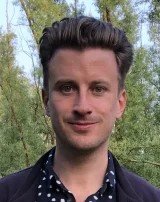
dr. Ronald de Vlaming


Assistant Professor, School of Business and Economics, Econometrics and Data Science

Assistant Professor, Amsterdam Neuroscience, Amsterdam Neuroscience - Complex Trait Genetics

Personal information

Ronald de Vlaming works as a tenured assistant professor at the Department of Econometrics and Data Science in the School of Business and Economics at the Vrije Universiteit Amsterdam (VU). He joined the VU in 2017.

His teaching is focused on mathematics, statistics, econometrics, machine learning, and computer science. His research is at the intersection of econometrics, economics, bioinformatics, statistics, and machine learning. In his research, he seeks to develop scalable and consistent methods to uncover the biological causes of health and wealth inequalities.

Ronald obtained his PhD from Erasmus University Rotterdam in 2017. During his time as PhD student, he was a visiting researcher at the Institute for Molecular Bioscience, which is part of the University of Queensland in Brisbane, Australia. Ronald is currently affiliated with the Social Science Genetic Association Consortium.

Research

Socioeconomic status, intelligence, and health tend to go hand in hand, and are, to a considerable degree, transmitted from one generation to the next, leading to wealth and health inequalities. The underlying mechanisms are poorly understood. However, decades of twin studies have established that virtually every human trait is driven by an interplay of genes (and, by extension, biology) and environment. The increasing availability of large-scale genetic data allows researchers to better understand the biological causes of such disparities and how these drive their intergenerational transmission.

Ronald's research is at the forefront of this development. He designs new statistical methods (or combines existing ones in novel ways), such that the resulting methods (1) are sufficiently versatile to capture important real-life dynamics, (2) can handle data for hundreds of thousands of individuals on millions of so-called biomarkers, (3) take into account important sources of bias and/or inconsistency, and (4) are published with accompanying open-source tools, enabling other researchers to apply his methods to their data.

His work has been published in journals such as Nature Genetics, PLOS Genetics, the International Journal of Epidemiology, Nature Communications, and Nature Human Behaviour.
Teaching

Ronald has developed, coordinated, and taught various courses (both large- and small-scale courses) on topics in mathematics, statistics, econometrics, machine learning, and computer science, mainly at the undergraduate level. In addition, he has directed and taught several summer school courses at the Tinbergen Institute. These courses are more geared towards professionals, policymakers, and PhD students. As of September 2025, he is one of the programme coordinators of the bachelor programmes in Econometrics and Operations Research (EOR) and Econometrics and Data Science (EDS).

In his upcoming Senior Teaching Qualification (Dutch: Seniorkwalificatie Onderwijs or SKO) project, he will focus on bridging the gap between high-school mathematics and the first year of university in the EOR and EDS programmes. Moreover, in his role as programme coordinator he is exploring ways to reinforce and extend the added value of EOR and EDS graduates for employers, especially in the context of a changing job market due to artificial intelligence.

Ancillary activities

No ancillary activities

Ancillary activities are updated daily

dr. Ronald de Vlaming

Keywords

  • inequality, health, wealth, genoeconomics, bioinformatics, machine learning, num...

Publicaties

Persoonlijke website

Onderzoek en publicaties VU

Onderzoek/publicaties Amsterdam UMC

Direct naar

Homepage Cultuur op de campus Sportcentrum VU Dashboard

Studie

Academische jaarkalender Studiegids Rooster Canvas

Uitgelicht

Doneer aan het VUfonds VU Magazine Ad Valvas Digitale toegankelijkheid

Over de VU

Contact en route Werken bij de VU Faculteiten Diensten
Privacy Disclaimer Veiligheid Webcolofon Cookie instellingen Webarchief

Copyright © 2026 - Vrije Universiteit Amsterdam