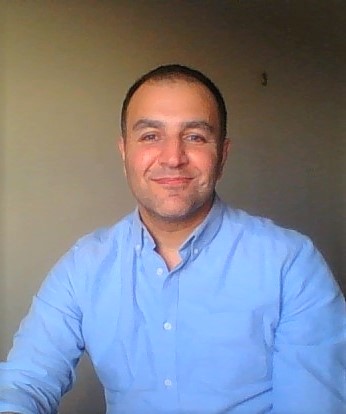
Robert Larruina is an Assistant Professor in the Department of Organization Sciences at the Faculty of Social Sciences and Humanities. Drawing on organization studies, governance, migration studies, environmental change, and disaster resilience, his work explores how environmental and climate pressures interact with social, institutional, and organisational dynamics to shape patterns of mobility, vulnerability, and adaptation. He is particularly interested in how local knowledge, community networks, and identity enable people and communities to navigate environmental change and uncertainty. Through this lens, he investigates how different forms of knowledge, governance arrangements, and collaborations among societal actors influence societies' capacity to adapt, transform, or respond.
His research also includes work on water governance and bottom-up forms of collective action in Uruguay. This work explores how citizens, local communities, and civil society organisations organise around environmental challenges, participate in natural resource governance, and mobilise local knowledge to protect water resources and promote sustainable development. More broadly, it helps explain how community-led initiatives shape environmental governance and societal resilience.
In the Dutch context, his research investigates disaster preparedness, resilience, and crisis governance, with particular attention to marginalised and vulnerable populations. More broadly, his work seeks to bridge research on climate change, human mobility, environmental governance, and societal resilience by deepening understanding of how communities, organisations, and institutions respond to complex and evolving societal challenges.
Robert is also actively involved in research on refugee reception and meaningful integration in the Netherlands, including studies on LGBTQIA+ refugee experiences and labour market integration in the care sector. His previous work examined organisational and societal responses to refugee reception and integration, focusing on the interactions between governmental organisations, civil society actors, volunteers, and refugees themselves.
Previously, Robert served as an associated researcher and work package leader in the Horizon 2020 project LINKS: Strengthening Links Between Technologies and Society for European Disaster Resilience, where he investigated vulnerability, diversity, and the role of civil society organisations in strengthening disaster resilience and crisis response capacities.
Robert’s PhD research examined organizational dynamics in refugee reception and integration in the Netherlands between 2011 and 2021. His work analyzed interactions among governmental organizations, civil society actors (sporadic, emergent, or established), and volunteers, as well as the role of refugees themselves in processes that claim to receive, integrate, and include them in Dutch society.