Onderwijs Onderzoek Actueel Over de VU EN
Login als
Studiekiezer Student Medewerker
Bachelor Master VU for Professionals
HOVO Amsterdam VU-NT2 VU Amsterdam Summer School Honoursprogramma Universitaire lerarenopleiding
Promoveren aan de VU Uitgelicht onderzoek Prijzen en onderscheidingen
Onderzoeksinstituten Onze wetenschappers Research Impact Support Portal Impact maken
Nieuws Agenda Biodiversiteit aan de VU
Israël en Palestijnse gebieden Cultuur op de campus
Praktische informatie VU en innovatiedistrict Zuidas Missie en Kernwaarden
Besturing Samenwerking Alumni Universiteitsbibliotheek Werken bij de VU
Sorry! The information you are looking for is only available in Dutch.
Deze opleiding is opgeslagen in Mijn Studiekeuze.
Er is iets fout gegaan bij het uitvoeren van het verzoek.

dr. Nathalie van der Putten


Assistant Professor, Faculty of Science, Earth and Climate

Personal information

I am a palaeoecologist and physical geographer interested in past environmental and climate change.

In 2008 I obtained a joint PhD degree (a so-called co-tutelle) from Ghent University, Belgium and the University Aix-Marseille in France. During my PhD I spent 2 years at the IMBE (Institut Méditerranéen de Biodiversité et d’Ecologie marine et continentale), University Aix-Marseille, France.  In spring 2010 I achieved a 2-year post-doc position granted from the Swedish Research Council (VR) and moved to the Geology Department, Lund University in Sweden. Further funding from VR was obtained (co-applicant) allowing me to become a researcher at the same department from 2012 onwards. In the summer of 2017 I started as an assistant professor at the Vrije Universiteit Amsterdam, the Netherlands.

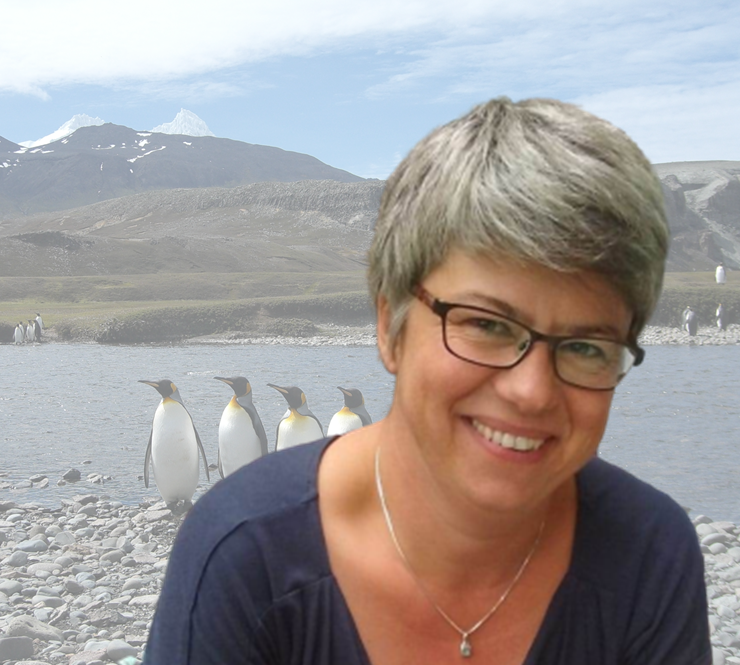
Fieldwork: I have participated in seven field campaigns on sub-Antarctic Islands. I was the lead scientist for three of these field campaigns.

I am a member of the INTIMATE network (Integrating ice, marine and terretsrial records).
Research

My main interest lies in Late Quaternary palaeoecology and palaeoclimatology and I have particular expertise in plant macrofossil analysis. I use peat archives to reconstruct past vegetation changes during the last glacial-interglacial transition and the Holocene. Plants living in peat lands are sensitive to changes in e.g. mire hydrology (depending on both precipitation and temperature), therefore changes in species assemblages can be used to infer periods of environmental and climate change.

I have worked extensively in sub-Antarctica – studying peat records from several islands, dispersed in the vast Southern Ocean. I started on South Georgia in the South Atlantic Ocean. Currently I am mainly working on Iles Kerguelen (49°S), Iles Crozet (46°S) and Ile Amsterdam (37°S), three French islands located in the South Indian Ocean. Climate in the mid to high latitudes of the Southern Hemisphere is highly influenced by the Southern Hemisphere Westerly winds, acting on large-scale precipitation and temperature patterns. I use peat deposits, extensively present on these islands, as a natural archive for reconstructing past changes in the strength and/or latitudinal position of the Westerlies, based on well-established and innovative proxy-methods to reconstruct past precipitation, wind and temperature changes (e.g. plant macrofossils, testate amoebae, peat humification, pollen, stable isotope geochemistry, biomarkers). Changes in the intensity and/or position of the SHW and their impact on the oceanic Antarctic Circumpolar Current, may affect upwelling of CO2 in the Southern Ocean, the thermohaline circulation, and, hence, current and past climate.

Teaching

I am teaching and coordinating the 3th year Bachelor course Geobotany. In the Master course Practical: Palaeoclimate Change and Environmental Impacts I am responsible for teaching terrestrial palaeoecology. I am also teaching in the three week fieldwork course in the French Jura with the second year BSc students.

From 2017 to 2020 I was involved as a teacher in the 3th year Bachelor course Sedimentary Environments. In 2018 I co-organised a 10-day Scotland Excursion, as part of our Master program. Main topics are glacial history and geomorphology, palaeoclimate, including some visits of raised bogs and other peat lands.

In July 2018 I was part of the organising team of the INTIMATE Summer Research Training School in the Vosges in France, teaching macrofossil analysis to PhD students from all over Europe.

Ancillary activities

No ancillary activities

Ancillary activities are updated daily

dr. Nathalie van der Putten

Onderzoek en publicaties VU

Onderzoek/publicaties Amsterdam UMC

Direct naar

Homepage Cultuur op de campus Sportcentrum VU Dashboard

Studie

Academische jaarkalender Studiegids Rooster Canvas

Uitgelicht

Doneer aan het VUfonds VU Magazine Ad Valvas Digitale toegankelijkheid

Over de VU

Contact en route Werken bij de VU Faculteiten Diensten
Privacy Disclaimer Veiligheid Webcolofon Cookie instellingen Webarchief

Copyright © 2026 - Vrije Universiteit Amsterdam