Onderwijs Onderzoek Actueel Over de VU EN
Bacheloropleidingen Masteropleidingen VU for Professionals
HOVO Amsterdam Taalcursussen Nederlands als tweede taal (NT2) Zomercursus van de VU Amsterdam Honoursprogramma Universitaire lerarenopleidingen
Promoveren aan de VU Uitgelicht onderzoek Prijzen en onderscheidingen
Interdisciplinaire onderzoeksinstituten Wetenschappers van de VU Research Impact Support Portal Creëer impact met jouw onderzoek
Nieuws Agenda Bewegen naar een vitale toekomst
VU UPDATE: Situatie in Israël en de Palestijnse gebieden Cultuur op de VU
Praktische informatie De VU en Innovatiedistrict Zuidas Missie, kernwaarden en visie
Besturing van de VU Valorisatie en impact Samenwerken met de VU VU Alumni Community Bekijk onze vacatures!
Sorry! The information you are looking for is only available in Dutch.
Deze opleiding is opgeslagen in Mijn Studiekeuze.
Er is iets fout gegaan bij het uitvoeren van het verzoek.

dr. Matti Gralka

Assistant Professor, Faculty of Science, Systems Biology

Assistant Professor, AIMMS

Personal information

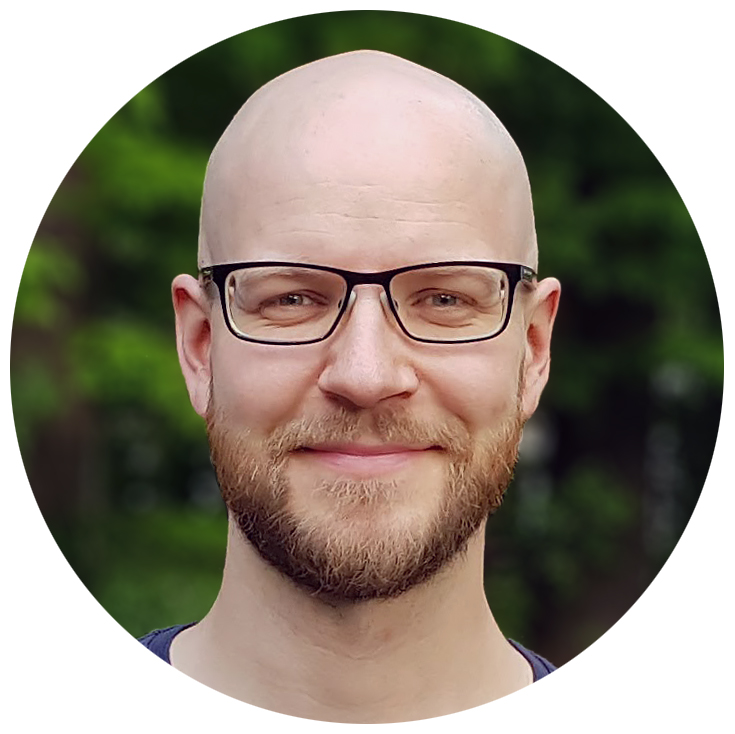
Thanks to recent advances in sequencing technologies, we have a good understanding of the composition of microbial communities from all corners of the world, including animal guts, oceans, or soils. However, we often do not know what individual community members do, how they interact with each other, and how these interactions drive the community dynamics and function, which limits our ability to predict and alter those dynamics. Dr Gralka tackles this problem by combining lab experiments with ecological theory to uncover principles of how microbes work together to drive biogeochemical cycles.

Dr. Matti Gralka is an assistant professor in the A-LIFE department at VU Amsterdam. Before moving the Amsterdam, he was a Simons postdoctoral fellow in Marine Microbial Ecology at MIT where he studied the physiology, interactions, and communities of microbes mediating the degradation of biopolymers like chitin in the ocean. He did his PhD in Physics at the University of California Berkeley, where he worked on understanding how spatial structure affects evolutionary dynamics.
Ancillary activities

No ancillary activities

Ancillary activities are updated daily

Direct naar

Homepage VU Amsterdam Cultuur op de VU Universiteitsbibliotheek Dashboard

Studie

Academische jaarkalender Studiegids Rooster Canvas

Uitgelicht

Doneer aan het VUfonds VU Magazine Ad Valvas Digitale toegankelijkheid

Over de VU

Contact met VU Amsterdam Bekijk onze vacatures! Faculteiten VU Amsterdam Diensten VU Amsterdam
Privacy Disclaimer Veiligheid Webcolofon Cookie instellingen Webarchief

Copyright © VU