Onderwijs Onderzoek Actueel Over de VU EN
Bacheloropleidingen Masteropleidingen VU for Professionals
HOVO Amsterdam Taalcursussen Nederlands als tweede taal (NT2) Zomercursus van de VU Amsterdam Honoursprogramma Universitaire lerarenopleidingen
Promoveren aan de VU Uitgelicht onderzoek Prijzen en onderscheidingen
Interdisciplinaire onderzoeksinstituten Wetenschappers van de VU Research Impact Support Portal Creëer impact met jouw onderzoek
Nieuws Agenda Bewegen naar een vitale toekomst
VU UPDATE: Situatie in Israël en de Palestijnse gebieden Cultuur op de VU
Praktische informatie De VU en Innovatiedistrict Zuidas Missie, kernwaarden en visie
Besturing van de VU Valorisatie en impact Samenwerken met de VU VU Alumni Community Bekijk onze vacatures!
Sorry! The information you are looking for is only available in Dutch.
Deze opleiding is opgeslagen in Mijn Studiekeuze.
Er is iets fout gegaan bij het uitvoeren van het verzoek.

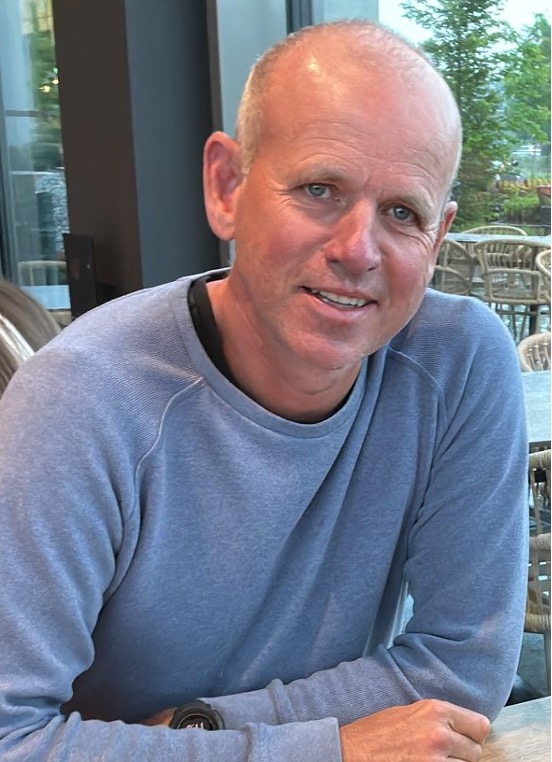
dr. Mark Verheijen

Associate Professor, Faculty of Science, Molecular and Cellular Neurobiology

Associate Professor, Amsterdam Neuroscience, Amsterdam Neuroscience - Cellular & Molecular Mechanisms

Personal information

Mark Verheijen is Associate Professor of ‘Glial-regulated Neuronal Plasticity’ at the Vrije Universiteit Amsterdam (VU). He was trained as a biologist with specialization biochemistry at Utrecht University, where he also obtained is PhD in developmental biology in 1997. After a post-doc at the Netherlands Cancer Institute, Amsterdam, on signal transduction in C. Elegans, he started his neuroscience career in 2000 as a post-doc on Schwann cell biology in the lab of Greg Lemke at the Salk Institute for Biological Studies, La Jolla. In 2004 he returned to the Netherlands to start his own team on Neuron-Glia interactions at the Center for Neurogenomics and Cognitive Research (CNCR) at the VU, were he is also director of the master program Neurosciences. With his research he aims to contribute to a better understanding of the role of glial cells in the regulation of neuronal plasticity in health and disease. For this purpose, his team mainly focusses on the role of perisynaptic astrocyte molecules in learning and memory, and to translate  findings on the diseased tripartite synapse in preclinical disease models, e.g. Alzheimer Disease, mild cognitive impairment, (MCI) and post-traumatic stress disorders (PTSD). Experiments are being performed both in vitro (e.g. neuron-glial cell cocultures) and in vivo (e.g. proteomic analysis, imaging and genetic manipulation of astrocytes).

Ancillary activities

No ancillary activities

Ancillary activities are updated daily
Direct naar

Homepage VU Amsterdam Cultuur op de VU Universiteitsbibliotheek Dashboard

Studie

Academische jaarkalender Studiegids Rooster Canvas

Uitgelicht

Doneer aan het VUfonds VU Magazine Ad Valvas Digitale toegankelijkheid

Over de VU

Contact met VU Amsterdam Bekijk onze vacatures! Faculteiten VU Amsterdam Diensten VU Amsterdam
Privacy Disclaimer Veiligheid Webcolofon Cookie instellingen Webarchief

Copyright © VU