Onderwijs Onderzoek Actueel Over de VU EN
Login als
Studiekiezer Student Medewerker
Bachelor Master VU for Professionals
HOVO Amsterdam VU-NT2 VU Amsterdam Summer School Honoursprogramma Universitaire lerarenopleiding
Promoveren aan de VU Uitgelicht onderzoek Prijzen en onderscheidingen
Onderzoeksinstituten Onze wetenschappers Research Impact Support Portal Impact maken
Nieuws Agenda Biodiversiteit aan de VU
Israël en Palestijnse gebieden Cultuur op de campus
Praktische informatie VU en innovatiedistrict Zuidas Missie en Kernwaarden
Besturing Samenwerking Alumni Universiteitsbibliotheek Werken bij de VU
Sorry! The information you are looking for is only available in Dutch.
Deze opleiding is opgeslagen in Mijn Studiekeuze.
Er is iets fout gegaan bij het uitvoeren van het verzoek.

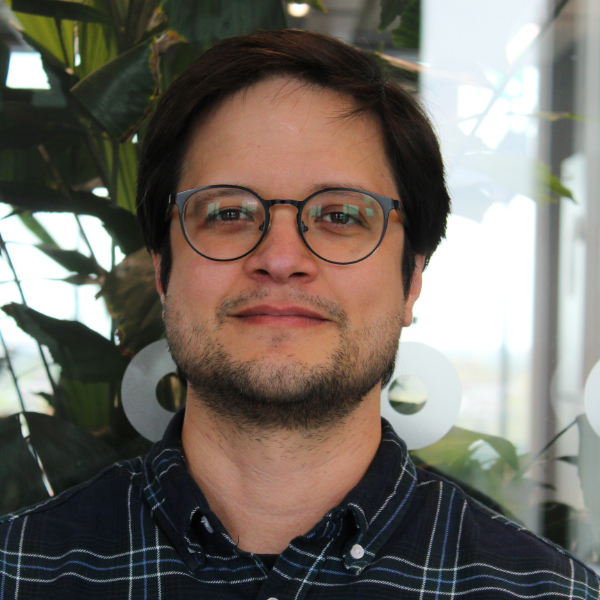
dr. Marcos Oliveira, MSc


Assistant Professor, Faculty of Science, Computer Science

Assistant Professor, Network Institute

Personal information

Marcos Oliveira is an Assistant Professor in Computer Science at the Department of Computer Science of the Vrije Universiteit Amsterdam, where he is a member of the AI & Behaviour group. He is also affiliated as an Honorary Lecturer with the Department of Computer Science at the University of Exeter in the United Kingdom. Previously, he was a postdoctoral researcher at the GESIS–Leibniz Institute for the Social Sciences in Germany.

His research lies at the intersection of computational social science, complex systems, network science, and data science, and is strongly informed by concepts from sociology and criminology. He studies how societal challenges such as social inequality, urban crime, and social risks of digitalization arise from individual behavior and interaction. His work combines large-scale behavioral data with mathematical and computational models to uncover mechanisms that drive social structure and dynamics. Empirically, he works with data ranging from online browsing activity to sensor-based measurements of face-to-face interaction, with applications to topics such as privacy, predictability, network inequality, and crime dynamics.

Marcos Oliveira has published in a wide range of international journals, including Nature Communications Physics, Nature Scientific Reports, Crime Science, Royal Society Open Science, and PLOS One. His research has been supported by competitive grants, including UKRI/Innovate UK and Facebook Integrity & Impact Research. In addition to his research activities, he serves on the Editorial Board of PLOS Complex Systems and has held various academic service and leadership roles.
Research

Marcos Oliveira's research asks how individual actions and interactions give rise to large-scale social patterns and challenges, and how explicit computational models can be used to understand the mechanisms underlying these processes. Central questions include: How do social groups form and evolve? Under what conditions do interaction patterns lead to social isolation or inequality? How predictable is human behavior in digital and physical environments, and what are the limits of such predictability? How does individual uniqueness emerge from behavioral data, and what does this imply for privacy, profiling, and urban crime?

To address these questions, he combines large-scale behavioral data (e.g., online browsing traces, sensor-based measurements) with theory-informed, interpretable computational models. His work bridges computer science with sociology and criminology, using network analysis and complex-systems approaches to study social dynamics in contexts ranging from online environments and social gatherings to cities.

Ancillary activities

No ancillary activities

Ancillary activities are updated daily

dr. Marcos Oliveira, MSc

Keywords

  • Q Science (General), QA Mathematics, H Social Sciences, QA75 Electronic computer...

Publicaties

Persoonlijke website

Onderzoek en publicaties VU

Onderzoek/publicaties Amsterdam UMC

Direct naar

Homepage Cultuur op de campus Sportcentrum VU Dashboard

Studie

Academische jaarkalender Studiegids Rooster Canvas

Uitgelicht

Doneer aan het VUfonds VU Magazine Ad Valvas Digitale toegankelijkheid

Over de VU

Contact en route Werken bij de VU Faculteiten Diensten
Privacy Disclaimer Veiligheid Webcolofon Cookie instellingen Webarchief

Copyright © 2026 - Vrije Universiteit Amsterdam