Onderwijs Onderzoek Actueel Over de VU EN
Bacheloropleidingen Masteropleidingen VU for Professionals
HOVO Amsterdam Taalcursussen Nederlands als tweede taal (NT2) Zomercursus van de Vrije Universiteit Amsterdam Honoursprogramma Universitaire lerarenopleidingen
Promoveren aan de VU Uitgelicht onderzoek Prijzen en onderscheidingen
Interdisciplinaire onderzoeksinstituten Wetenschappers van de VU Research Impact Support Portal Creëer impact met jouw onderzoek
Nieuws Agenda Bewegen naar een vitale toekomst
VU UPDATE: Situatie in Israël en de Palestijnse gebieden Film | Beeldende kunst | Theater & creatieve cursussen
Praktische informatie De VU en Innovatiedistrict Zuidas Missie, kernwaarden en visie
Besturing van de VU Valorisatie en impact Samenwerken met de VU VU Alumni Community Bekijk onze vacatures!
Sorry! The information you are looking for is only available in Dutch.
Deze opleiding is opgeslagen in Mijn Studiekeuze.
Er is iets fout gegaan bij het uitvoeren van het verzoek.

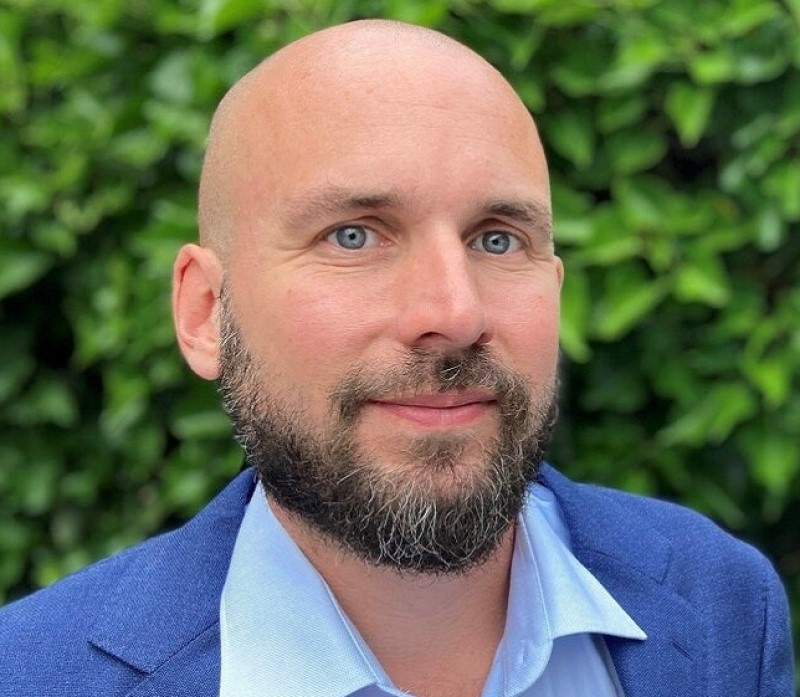
dr. Marc van de Wardt

Associate Professor, School of Business and Economics, Management and Organisation

Personal information

Dr. Marc van the Wardt is Associate Professor at the School of Business and Economics within the department of Management and Organization of the Vrije Universiteit. He had an interdisiplinary background with MA degrees in Communication Science and Sociology and a PhD in Political science (2014, University of Amsterdam). By combining insights from psychology, political science, and organizational studies, his research seeks to understand how individuals self-select and are selected into positions of power and influence, and what the consequences of these selection processes are for politics, organizations and society. 

Research

Why do some people end up in positions of power while others do not? And do our selection systems produce the leaders that citizens actually want?

Marc's research addresses these questions by studying who aspires to positions of influence, who succeeds in attaining them, and how these individuals differ from those who do not. Combining insights from political science, psychology, and organizational studies, he investigates how personal characteristics shape leadership emergence, career advancement, and survival in competitive environments.

His current NWO Vidi project, Survivor: Uncovering the Selection Process of Political Elites in Europe, examines how personality traits influence who enters politics, who advances to higher office, who remains politically successful, and whether the politicians who emerge from these selection processes possess the qualities citizens value most. The project focuses particularly on characteristics linked to personal virtue (or a lack thereof), such as honesty-humility, narcissism, and Machiavellianism, which are among the strongest predictors of ethical and unethical behaviour.

At the heart of Marc's research lies a simple question: can we trust competitive selection processes to place the right people in positions of power? This perspective also informs his teaching in Business Ethics, where he encourages students to think critically about responsible leadership, the societal role of business, and the conditions under which individuals and organizations create value for society.

His earlier research examined the rise and decline of political parties -another form of selection and competition, albeit at the organizational level - and was supported by research fellowships from the Research Foundation Flanders (FWO) and the Fund for Scientific Research Wallonia (FNRS).

His work has appeared in journals such as the American Journal of Political Science, the British Journal of Political Science, Comparative Political Studies, the European Journal of Political Research, and the Journal of Politics. His dissertation was nominated for the Best Dissertation Award 2014 by the Dutch and Flemish Political Science Association. He currently serves as Co-Editor-in-Chief of Acta Politica.
Teaching

Marc currently teaches Business Ethics, where he encourages students to think critically about responsible leadership, and the conditions under which organizations can create value for both shareholders and society. Drawing on his background as a social scientist, he approaches ethical questions not only from a normative perspective - what organizations and leaders should do - but also from an empirical perspective, examining the individual and organizational factors that make ethical behaviour more or less likely.

His broader teaching experience reflects his interdisciplinary background. Over the years, he has taught courses in comparative politics, research methods, statistics, business administration, organizational behaviour, human resource management, and international relations. He has taught at all levels, from undergraduate to research master's programmes. He has extensive experience teaching in both Dutch and international classrooms

Ancillary activities

No ancillary activities

Ancillary activities are updated daily

Direct naar

Unlock Your Potential: Studeer aan de VU Film | Beeldende kunst | Theater & creatieve cursussen Universiteitsbibliotheek Dashboard

Studie

Academische jaarkalender Studiegids Rooster Canvas

Uitgelicht

Doneer aan het VUfonds Inspirerende verhalen van alumni en wetenschappers Ad Valvas Digitale toegankelijkheid

Over de VU

Contact met de Vrije Universiteit Amsterdam Bekijk onze vacatures! Faculteiten Vrije Universiteit Amsterdam Diensten
Privacy Disclaimer Veiligheid Webcolofon Cookie instellingen Webarchief

Copyright © VU