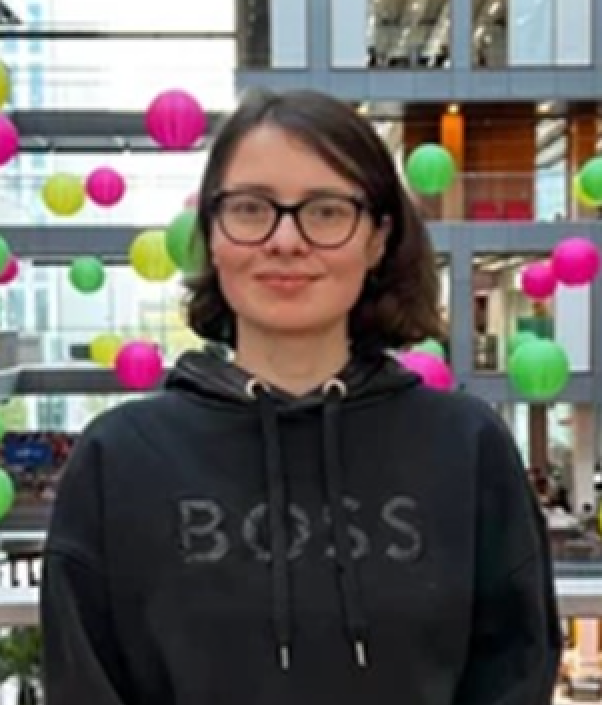
Lyuba Amitonova obtained her PhD from the Lomonosov Moscow State University (Russia) in 2013 working on neurophotonics – optical methods to study and control the brain. Soon after, she started as a postdoc at the University of Twente (Netherlands) focusing on advanced methods of wavefront engineering for imaging, endoscopy, and quantum communication. In 2017 she secured a prestigious VENI grant (NWO) and moved to Vrije Universiteit Amsterdam, where she pioneered super-resolution fiber imaging by combining advanced computational methods with multimode fiber optics. In October 2019, she received WISE fellow and has been appointed as a group leader at the Advanced Research Center for Nanolithography and an assistant professor at VU Amsterdam.
Research Description
Optical microscopy is widely used across disciplines such as physics, engineering, chemistry, and biomedical research. However, current methods are limited by fundamental constraints including spatial and temporal resolution and penetration depth. These limitations restrict applications such as studying neuronal activity deep within the living brain with subcellular resolution, which is necessary to better understand brain functions like thoughts, emotions, and consciousness.
This research develops minimally invasive deep-tissue nanoscopy by jointly designing optical hardware and computational post-processing. Using approaches such as advanced microscopy, wavefront engineering, fiber probes, compressive sensing, computational imaging, and machine learning, the project aims to achieve deep-tissue imaging beyond diffraction and Nyquist limits in a compact optical setup.
In collaboration with Ruud Toonen (VU Amsterdam) and Jeroen Hoozemans, the work focuses on visualizing subcellular brain structures such as dendritic spines, studying neuropeptide transmission in the intact brain, and imaging human brain tissue affected by Alzheimer’s disease.