Onderwijs Onderzoek Actueel Over de VU EN
Login als
Studiekiezer Student Medewerker
Bachelor Master VU for Professionals
HOVO Amsterdam VU-NT2 VU Amsterdam Summer School Honoursprogramma Universitaire lerarenopleiding
Promoveren aan de VU Uitgelicht onderzoek Prijzen en onderscheidingen
Onderzoeksinstituten Onze wetenschappers Research Impact Support Portal Impact maken
Nieuws Agenda Gezond leven aan de VU
Israël en Palestijnse gebieden Cultuur op de campus
Praktische informatie VU en innovatiedistrict Zuidas Missie en Kernwaarden
Besturing Samenwerken met ons Alumni Universiteitsbibliotheek Werken bij de VU
Sorry! The information you are looking for is only available in Dutch.
Deze opleiding is opgeslagen in Mijn Studiekeuze.
Er is iets fout gegaan bij het uitvoeren van het verzoek.

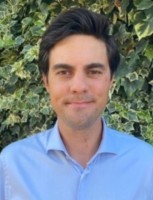
dr. ir. Joris van Heijningen


Assistant Professor, Faculty of Science, (Astro)-Particles Physics

Assistant Professor, Faculty of Science, Biophysics Photosynthesis/Energy

Personal information

Dr. Joris van Heijningen is an experienced instrumental researcher that has worked in nuclear physics, particle physics and gravitational waves (GWs). After studying Applied Physics at the Delft University of Technology, where he worked at CERN and SLAC, his Ph.D. at Nikhef / Vrije Universiteit Amsterdam involved projects at the Virgo and KAGRA GW observatories. The Ph.D. highlights have been the development of the world’s most sensitive inertial sensor and the commissioning of the suspension of Virgo's optical tables, one of which housed the photodiodes that caught Virgo's first GW signals. 

His first postdoc at the University of Western Australia involved projects on Euler spring vibration isolation, optical mode matching and GW detector modelling, as well as teaching particle physics and designing a new course in GW instrumentation. His previous position was at UCLouvain, Belgium, where he worked as a Research Scientist on several projects for Einstein Telescope, the Lunar Gravitational-wave Antenna and Advanced Virgo. Lastly, the timing of the first detection of GWs in 2015 gave the first opportunities for outreach. That led to 20+ public seminars and a national TV appearance in the Netherlands. Dr. van Heijningen continues to search out opportunities to interact with the public.
Research

Dr. van Heijningen's future research is focused on cryogenic inertial sensor development for Einstein Telescope (ET) and the LunarGravitational-wave Antenna (LGWA). He will continue his efforts towards superconducting actuation and sensing techniques that have the potential to reduce noise in the final mirror suspension stages for the interferometric gravitational-wave detector ET and make the inertial sensors planned to be deployed on the Moon for LGWA more sensitive. Additionally, he contributes towards suspension and laser wavefront sensing upgrades for the current European gravitational-wave detector Virgo, where Nikhef has important responsibilities and plans for its future.

Joris van Heijningen - (Astro-) Particle Physics - Department of Physics and Astronomy

Ancillary activities
  • European Gravitational-wave Observatory | Cascina | Wetenschapper | 2024-01-15 - present

Ancillary activities are updated daily

dr. ir. Joris van Heijningen

Keywords

  • QC Physics, Inertial sensors, Virgo's optical tables, Euler spring vibration iso...

Publicaties

Onderzoek en publicaties VU

Onderzoek/publicaties Amsterdam UMC

Direct naar

Homepage Cultuur op de campus Sportcentrum VU Dashboard

Studie

Academische jaarkalender Studiegids Rooster Canvas

Uitgelicht

Doneer aan het VUfonds VU Magazine Ad Valvas Digitale toegankelijkheid

Over de VU

Contact en route Werken bij de VU Faculteiten Diensten
Privacy Disclaimer Veiligheid Webcolofon Cookie instellingen Webarchief

Copyright © 2026 - Vrije Universiteit Amsterdam