Onderwijs Onderzoek Actueel Over de VU EN
Login als
Studiekiezer Student Medewerker
Bachelor Master VU for Professionals
HOVO Amsterdam VU-NT2 VU Amsterdam Summer School Honoursprogramma Universitaire lerarenopleiding
Promoveren aan de VU Uitgelicht onderzoek Prijzen en onderscheidingen
Onderzoeksinstituten Onze wetenschappers Research Impact Support Portal Impact maken
Nieuws Agenda Gezond leven aan de VU
Israël en Palestijnse gebieden Cultuur op de campus
Praktische informatie VU en innovatiedistrict Zuidas Missie en Kernwaarden
Besturing Samenwerken met ons Alumni Universiteitsbibliotheek Werken bij de VU
Sorry! The information you are looking for is only available in Dutch.
Deze opleiding is opgeslagen in Mijn Studiekeuze.
Er is iets fout gegaan bij het uitvoeren van het verzoek.

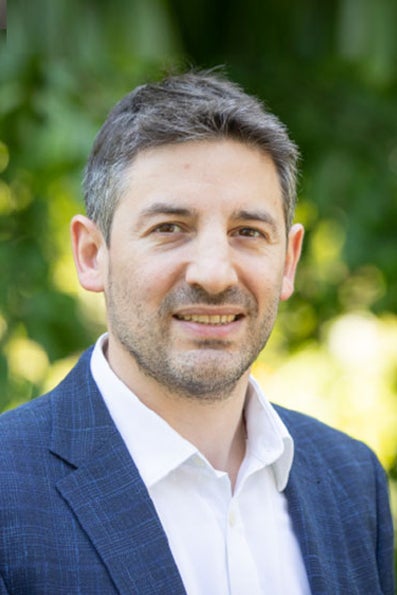
dr. David Dulin


Associate Professor, Faculty of Science, Physics of Living Systems

Associate Professor, LaserLaB, LaserLaB - Molecular Biophysics

Personal information

Group page: David Dulin lab – Biological Physics of Gene Machines

David Dulin graduated his PhD at the Institut d’Optique-University Paris-Saclay on investigating bacterial and mammalian ribosome elongation dynamics using single-molecule fluorescence microscopy. He continued his academic journey in single-molecule biophysics by doing a first postdoc at TU Delft (The Netherlands) and a second one at the University of Oxford (England). He then started his lab in Germany at FAU Erlangen-Nuremberg, where he was the “Physics and Medicine” IZKF junior group leader. In 2021, he relocated his lab at the Vrije Universiteit Amsterdam where he currently is an assistant professor. He pioneered high-throughput and high-spatiotemporal resolution magnetic tweezers, and the investigation of RNA virus replication/transcription in vitro at the single-molecule level. He established the first single-molecule assay to investigate the SARS-CoV-2 replication-transcription complex RNA synthesis dynamics, which he applied to reveal one mechanism of action of the antiviral Remdesivir. He has been awarded several grants from the German Research foundation (DFG), the Dutch Research Council (NWO), and the National Institutes of Health (NIH).
Research

Their group investigates how cellular and viral genomes are processed by molecular machines. We develop and apply innovative single-molecule techniques to image and manipulate such machines one molecule at a time when performing their function. We aim at capturing the decisive kinetic events that regulate replication and transcription in RNA virus, e.g. SARS-CoV-2, and the cell. We also apply our unique assays to assist the rational design of novel antiviral drugs, and investigate innate immunity molecular mechanisms.

David Dulin | Physics Living Systems | Department of Physics and Astronomy

Their lab has pioneered and developed state-of-the-art single-molecule magnetic tweezers instruments, reaching exquisite spatiotemporal resolution and parallelization capabilities. Our lab aims at pushing the technical limits of these instruments to improve resolution without compromising the parallelization. We also develop high-throughput fluorescence microscopy assays, which we aim at combining with magnetic tweezers.

Teaching

David is part of the Examination Board of the VU-UvA joined B.Sc. and M.Sc.program in Physics & Astronomy. He also teaches the following classes:

  • Mechanics and Thermodynamics in the Cell
  • Advanced Biophysics
Ancillary activities

No ancillary activities

Ancillary activities are updated daily

dr. David Dulin

Keywords

  • Q Science, Single-molecule biophysics, Single-molecule fluorescence microscopy, ...

Publicaties

Onderzoek en publicaties VU

Onderzoek/publicaties Amsterdam UMC

Direct naar

Homepage Cultuur op de campus Sportcentrum VU Dashboard

Studie

Academische jaarkalender Studiegids Rooster Canvas

Uitgelicht

Doneer aan het VUfonds VU Magazine Ad Valvas Digitale toegankelijkheid

Over de VU

Contact en route Werken bij de VU Faculteiten Diensten
Privacy Disclaimer Veiligheid Webcolofon Cookie instellingen Webarchief

Copyright © 2026 - Vrije Universiteit Amsterdam