Onderwijs Onderzoek Actueel Over de VU EN
Bacheloropleidingen Masteropleidingen VU for Professionals
HOVO Amsterdam Taalcursussen Nederlands als tweede taal (NT2) Zomercursus van de VU Amsterdam Honoursprogramma Universitaire lerarenopleidingen
Promoveren aan de VU Uitgelicht onderzoek Prijzen en onderscheidingen
Interdisciplinaire onderzoeksinstituten Wetenschappers van de VU Research Impact Support Portal Creëer impact met jouw onderzoek
Nieuws Agenda Bewegen naar een vitale toekomst
VU UPDATE: Situatie in Israël en de Palestijnse gebieden Cultuur op de VU
Praktische informatie De VU en Innovatiedistrict Zuidas Missie, kernwaarden en visie
Besturing van de VU Valorisatie en impact Samenwerken met de VU VU Alumni Community Bekijk onze vacatures!
Sorry! The information you are looking for is only available in Dutch.
Deze opleiding is opgeslagen in Mijn Studiekeuze.
Er is iets fout gegaan bij het uitvoeren van het verzoek.

dr. Daniel Fernando Preciado Vanegas

Assistant Professor, Faculty of Social Sciences and Humanities, Communication Science

Assistant Professor, Network Institute

Assistant Professor, Research Programmes - Social Sciences, Communication Choices, Content and Consequences (CCCC)

Personal information

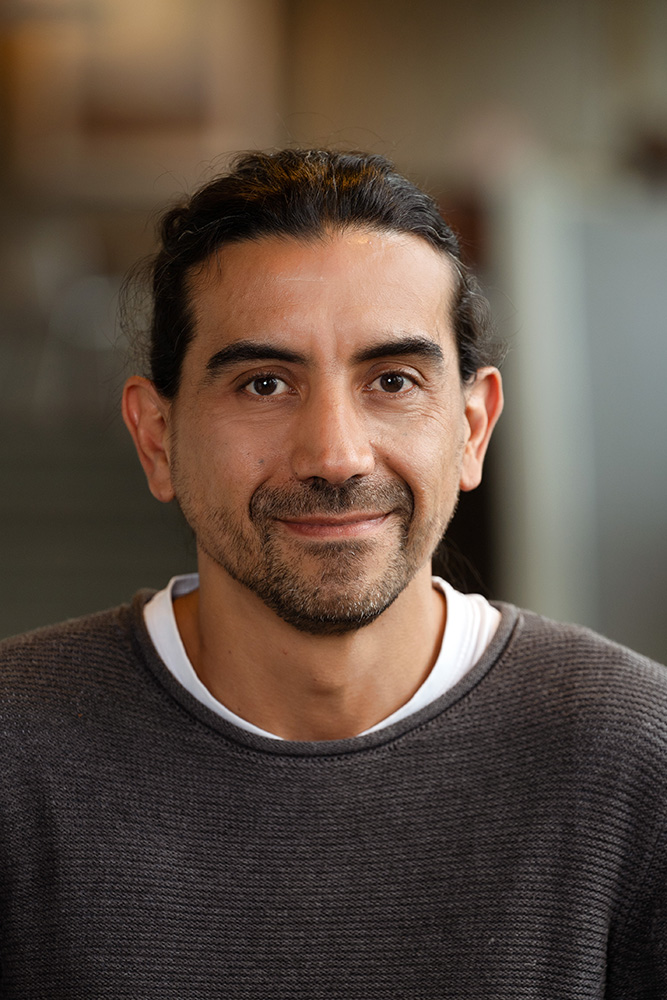
Daniel F. Preciado Vanegas is an Assistant Professor at the Department of Communication Science and the Network Institute at VU Amsterdam, where he is part of the Media Psychology group. His research examines the psychological and physiological effects of social robots and artificial agents, and their applications in different context, including healthcare, education, and personal use.

Daniel obtained his PhD in Cognitive Psychology from the Department of Experimental and Applied Psychology at VU Amsterdam, investigating the perceptual and attentional effects of stimuli associated with threats and rewards. This foundation in cognitive psychology informs his current work on human-robot interaction, bringing an understanding of fundamental perceptual and emotional processes to questions about how people respond to artificial agents.
Research

His broader research interests includes the applications of social robots and artificial agentsin a variety of settings, including mental health awareness, news dissemination, healthcare, and education. This work addresses practical questions about where and how social robots might effectively support human wellbeing, and seeks to provide insights to facilitate their effective and responsible implementation.

His research employs multiple methodologies to understand human responses to social robots. This includes self-report measures, experimental studies, psychophysiology, and methods such as EEG and eye-tracking. He collaborates with researchers from technical and applied backgrounds to examine human-robot interaction from both psychological and technological perspectives.

Ancillary activities

No ancillary activities

Ancillary activities are updated daily

Direct naar

Homepage VU Amsterdam Cultuur op de VU Universiteitsbibliotheek Dashboard

Studie

Academische jaarkalender Studiegids Rooster Canvas

Uitgelicht

Doneer aan het VUfonds VU Magazine Ad Valvas Digitale toegankelijkheid

Over de VU

Contact met VU Amsterdam Bekijk onze vacatures! Faculteiten VU Amsterdam Diensten VU Amsterdam
Privacy Disclaimer Veiligheid Webcolofon Cookie instellingen Webarchief

Copyright © VU