Research
My main research focus is gravitational wave science, particularly instrumentation for large ground-based facilities. I specialise in laser interferometry, quantum optics, and numerical modelling. A laser interferometer lies at the heart of detectors that convert gravitational wave strain into an optical phase signal, with quantum-level opto-mechanical couplings creating a completely new experimental system. We combine advanced interferometer configurations and new optical technology to achieve outstanding sensitivity, making it essential to understand noise propagation through the optical system. I support the current LIGO and Virgo detectors by developing and maintaining realistic models for the Advanced detectors, while my group contributes computer models of complex opto-mechanical systems for the design of the Einstein Telescope.
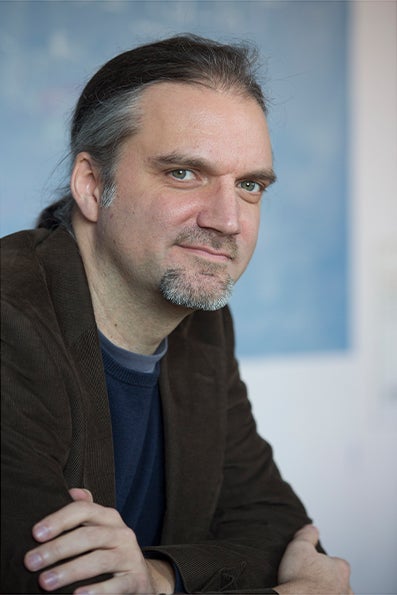
Andreas Freise benoemd tot nieuwe directeur Europese organisatie Einstein Telescoop - Einstein Telescope
Research Track record
I have gained authorship rights in four major international collaborations through substantial contributions to gravitational wave detector design and implementation. I joined the LIGO Scientific Collaboration in 1999 and contributed to Advanced LIGO and Advanced Virgo, enabling the first detection in 2015. I also worked on LISA Pathfinder hardware, served as a working group chair for the LISA Science Team, and reviewed the Japanese KAGRA detector. I am now contributing to the next-generation European detector, the Einstein Telescope. In addition, I pioneered numerical simulations essential for designing and commissioning large laser interferometers, including developing the widely used FINESSE software.