Yicong Lin is a tenured Assistant Professor in the Department of Econometrics and Data Science at Vrije Universiteit Amsterdam and a Research Fellow at the Tinbergen Institute. His work lies at the intersection of econometrics, statistics, and data science, with a particular focus on developing methods for complex time series and panel data, including functional and matrix-valued observations. His research is motivated by applications in economics, finance, climate research, and statistical machine learning. He obtained his Ph.D. in Econometrics from Maastricht University in 2021.
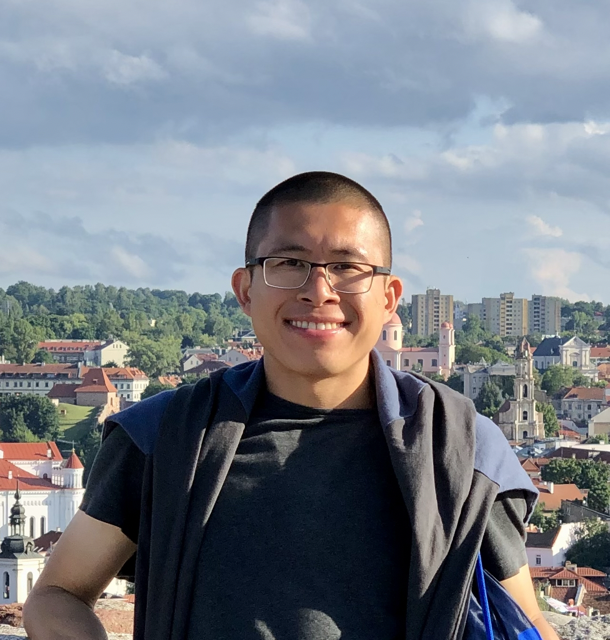
dr. Yicong Lin
Assistant Professor, School of Business and Economics, Econometrics and Data Science
, Tinbergen Institute
Yicong Lin develops econometric and statistical methods for analysing complex data that evolve over time and across units. His work is motivated by applications in which relationships may change gradually, shift abruptly, or vary across locations, assets, markets, or groups. Examples include housing prices, financial risk and volatility surfaces, atmospheric and climate-related measurements, extreme temperatures, and machine-learning problems such as domain adaptation.
His primary research field is time series econometrics. Methodologically, his work focuses on estimation, inference, forecasting, and uncertainty quantification for models with nonstationarity, time-varying parameters, structural change, endogeneity, and complex dependence. His recent research includes locally stationary and time-varying coefficient models, resampling methods, cointegration and trend modelling, observation-driven dynamics, functional and matrix-valued time series, extreme value theory, information-theoretic methods, and climate econometrics.
Yicong Lin teaches econometrics, statistics, and data science at the bachelor’s, master’s, and PhD levels. His teaching trains students to combine mathematical foundations with practical data analysis: to understand why statistical methods work, implement them in software, assess their assumptions and limitations, and use them to draw reliable conclusions from complex empirical data. At the bachelor’s level, he helps students build foundations in probability, inference, programming-based statistical reasoning, and academic communication. At the master’s and postgraduate levels, his teaching focuses on modern statistical and econometric tools for large-scale, climate-related, spatial, and functional data, with applications in economics, finance, environmental science, and data-driven research. He has coordinated courses and thesis tracks in econometrics, data science, and climate econometrics, and has supervised a large number of bachelor’s and master’s theses.
No ancillary activities
Ancillary activities are updated daily
Profile
Keywords
- Time series econometrics, Nonstationary time series, Time-varying models, Bootst...
Publications