Personal information
| Telefoon | +31 20 59 86109 |
| w.p.schellart@vu.nl | |
| Kamer | E-237 |
| Telefoon | +31 20 59 86109 |
| w.p.schellart@vu.nl | |
| Kamer | E-237 |
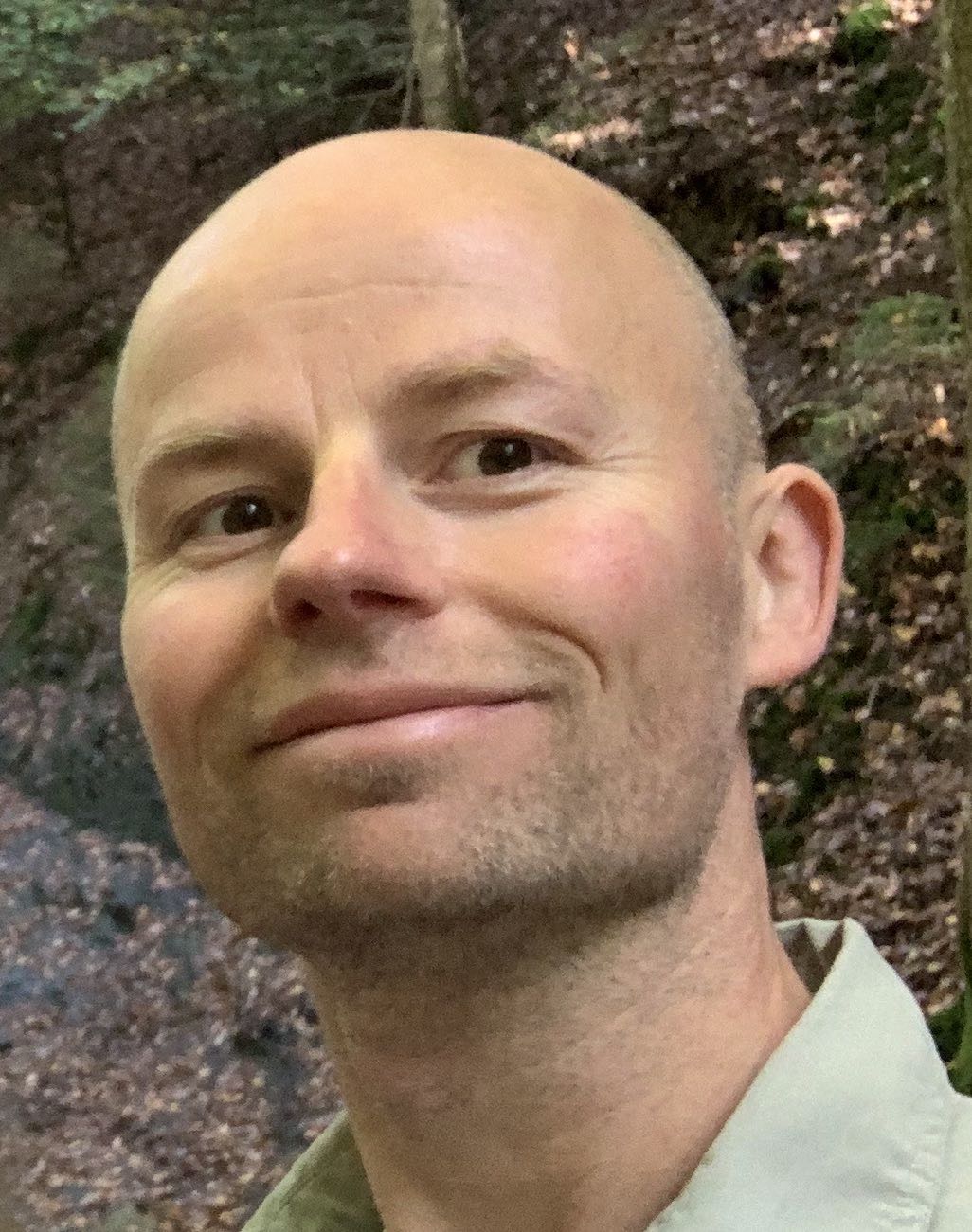
Wouter Schellart is Professor of Geodynamics and Tectonics within the Department of Earth Sciences at the Vrije Universiteit Amsterdam. He leads the Geodynamics and Tectonics research group, which focuses on five research topics:
Wouter's research is concerned with convergent plate boundaries and particularly focuses on subduction zones. Studying subduction zones is important, both scientifically and for society, because:
Research methods
Wouter uses laboratory-based (experimental) and numerical modelling techniques, global data analyses, statistical investigations and plate tectonic reconstructions to quantify geodynamic processes ranging in scale from the uppermost few km of the crust to the whole mantle. His research focuses both on generic, process-oriented, research and research applied to specific geological settings and geographical locations (e.g. Andes, Southwest Pacific, Himalaya-East Asia, Mediterranean, Scotia Sea). His geodynamic modelling efforts, combined with global statistical analyses, provide insight into subduction dynamics and the global distribution of giant subduction zone earthquakes.
Wouter is in charge of the Kuenen-Escher Geodynamics Laboratory (KEG Lab), a modelling facility that is unique in the world, as it is the only lab where tomographic PIV techniques are used to investigate and quantify subduction and flow in the Earth's mantle. The lab is also unique because of its combined usage of stereo-PIV techniques, surface strain and surface topography analyses. In the lab, crustal and mantle-scale geodynamic processes are simulated at small spatial scales and short temporal scales using experiments in low Reynolds number fluid mechanics and in solid mechanics.
Current research
One of Wouter's current research endeavours, funded by the Dutch Science Foundation (NWO), focuses on the subduction zone forearc, investigating which physical parameters might control its topography, and how this might be linked with the spatial distribution of giant subduction zone megathrust earthquakes. In recent research, funded by a Vici grant from NWO, he investigated the biggest mountain ranges on Earth, the Andes and Himalaya.
Great Lisbon Earthquake of 1755
With colleagues from Portugal, Wouter investigates plate boundaries and natural hazards, in particular the plate boundary zone of southwestern Europe (southwest margin of Portugal and Spain, Gulf of Cadiz, Strait of Gibraltar) to understand the geodynamics of the region and to find the origin of the largest historic earthquake in Europe, the 1755 Great Lisbon earthquake. The 1755 earthquake has an estimated magnitude Mw of 8.5-8.7, resulted in approximately 50,000 deaths in the region, destroyed the city of Lisbon, was felt thousands of km away, and the tsunami it generated reached towns and cities in the Netherlands. In earlier work, the team has developed laboratory experiments and conceptual models to investigate various faults and their relation to the earthquake. Most recently, the team has combined numerical models, seismological data, tomographic models, structural data and tectonic observations, to find the source of the Great Lisbon Earthquake. See also some news coverage in a popular science magazine (in Dutch), a radio interview (in Dutch), newspapers (in Dutch) and a news article in Science.
Some relevant research:
Paper on the discovery of oceanic plate delamination in the Atlantic Ocean near Portugal and the Great Lisbon Earthquake of 1755 [Duarte et al., 2025]
First paper to present tomographic PIV techniques quantifying subduction-induced mantle flow patterns, with an application to Cenozoic volcanism in Tibet (open access) [Strak, Xue and Schellart, 2024]
Open access paper presenting reconstructions of the tectonic evolution of the Scotia Sea ocean gateway, and discussing its effect on the Antarctic Circumpolar Current [Oldenhage, Schellart and Beniest, 2024]
Open access paper on subduction dynamics and overriding plate deformation, presenting new geodynamic subduction models and a global statistical analysis [Schellart, 2024]
Open access paper on continental flat slab subduction below the Himalaya and Tibet, and its contribution to the extreme topography of the mountain belt [Xue, Schellart and Strak, 2024]
Review paper on subduction zone geometry, geology, kinematics and dynamics, including an application to the occurrence of giant subduction zone megathrust earthquakes [Schellart, 2023]
Open access paper on a new subduction initiation mechanism, Subduction Invasion Polarity Switch (SIPS), with an application to the Scotia Sea region [Schellart et al., 2023]
Open access paper on the India-Eurasia collision, continental subduction and slab detachment [Laik, Schellart and Strak, 2023]
Open access paper on overriding plate deformation and topography during rollback and rollover subduction [Xue, Schellart and Strak, 2022]
Open access paper on periodic, short-term and long-term flat slab subduction: Schellart and Strak [2021]
Open access paper on thermo-mechanical modelling of the South American subduction zone: Strak and Schellart [2021]
Open access paper on flat slab subduction: Schellart [2020]
Open access paper on the India-Eurasia collision, extrusion tectonics, widespread continental deformation in Central, East and Southeast Asia and extension in Tibet, and the role of the Pacific and Sunda subduction zones in driving such deformation: Schellart et al. [2019]
Open access paper on the origin and evolution of the Andes and the migration of the Andean volcanic arc: Schellart [2017]
Open access paper on the interaction between the Tonga-Kermadec-Hikurangi subduction zone and intraplate volcanism in the Samoa region: Strak and Schellart [2018]
Open access paper on giant subduction zone earthquakes, which includes a global map showing which subduction zone segments on Earth are most likely to produce giant earthquakes: Schellart and Rawlinson [2013]
Open access paper on the origin of Lake Eyre and the Murray-Darling Basin, the largest intra-continental basins in Australia: Schellart and Spakman [2015]
Open access paper on subduction modelling and mantle flow: Schellart and Moresi [2013]
Open access review paper on analogue modelling: Schellart and Strak [2016]
Main topics of research:
-Subduction zone evolution and subduction-induced mantle flow.
-Cordilleran mountain building at subduction zones (e.g. Andes).
-Backarc basin formation at subduction zones (e.g. North Fiji Basin, Tyrrhenian Sea).
-Dynamic topography and (past) subduction (e.g. SW Pacific, Australia).
-Collisional mountain building and continental deformation (e.g. Himalaya-East Asia).
-Continental subduction, ophiolite obduction (e.g. New Guinea, New Caledonia).
-Giant earthquakes at subduction zones.
-Subduction and topography.
BSc courses
-Geophysics (coordinator & teacher)
-Field Course Solid Earth (teacher)
MSc courses
-Advanced Geodynamics and Tectonics (coordinator & teacher)
-Orogenesis (coordinator & teacher)
-Mantle Properties (teacher)
Awards, medals, prizes
Cum laude award for MSc degree from the Vrije Universiteit Amsterdam, 1999.
Molly Holman Doctoral Medal for the best PhD-thesis in the Faculty of Science, Monash University, 2003.
J. G. Russell award from the Australian Academy of Science, 2007.
Victoria & Tasmania Young Tall Poppy Science Award from the Australian Institute for Policy & Science, 2009.
Vice-Chancellor’s Award for Excellence in Research by and Early Career Researcher, Monash University, 2010.
E. S. Hills Medal from the Geological Society of Australia, awarded every two years to a young (<40 years) Australian resident for outstanding contributions to any branch of the geological sciences, anywhere, 2012.
Anton Hales Medal 2013 from the Australian Academy of Science for distinguished research in the Earth sciences, awarded annually to a researcher no more than 40 years of age in the calendar year of nomination.
D. I. Groves Award 2016 from the Geological Society of Australia (with PhD student Nasim Kharazizadeh) for the best paper published in Australian Journal of Earth Sciences in 2016 by a student (as first author) within six years of graduation.
Fellowships
Australian Postdoctoral Fellowship (APD) (2004-2006) from the Australian Research Council (ARC).
Queen Elizabeth II Fellowship (QE II) (2007-2011) from the Australian Research Council (ARC).
Monash Research Fellowship (2007-2012) from Monash University.
Future Fellowship (2012-2015) from the Australian Research Council (ARC).
Vici Fellowship (2017-2024) from the Dutch National Science Foundation (NWO).
No ancillary activities
Ancillary activities are updated daily
Profile
Publications
Copyright © VU