Education Research Current About VU Amsterdam NL
Bachelor's programmes Master's programmes VU for Professionals
Exchange programme VU Amsterdam Summer School Honours Programme Dutch language courses (NT2) Semester in Amsterdam
PhD at VU Amsterdam Featured research Prizes and distinctions
Interdisciplinary research institutes Scientists of VU Amsterdam Research Impact Support Portal Create impact with your research
News Events calendar Moving towards a healthier future
VU UPDATE: Situation in Israel and the Palestinian regions Culture at VU Amsterdam
Practical matters Mission, core values and vision Entrepreneurship on VU Campus
Governance of VU Amsterdam Valorisation and impact Partnering with VU Amsterdam VU Alumni Community Take a look at our vacancies!
Sorry! De informatie die je zoekt, is enkel beschikbaar in het Engels.
This programme is saved in My Study Choice.
Something went wrong with processing the request.

dr. Mike Ligthart

Assistant Professor, Faculty of Science, Artificial intelligence

Assistant Professor, Network Institute

Assistant Professor, Research Programmes - Science, Social AI

Personal information

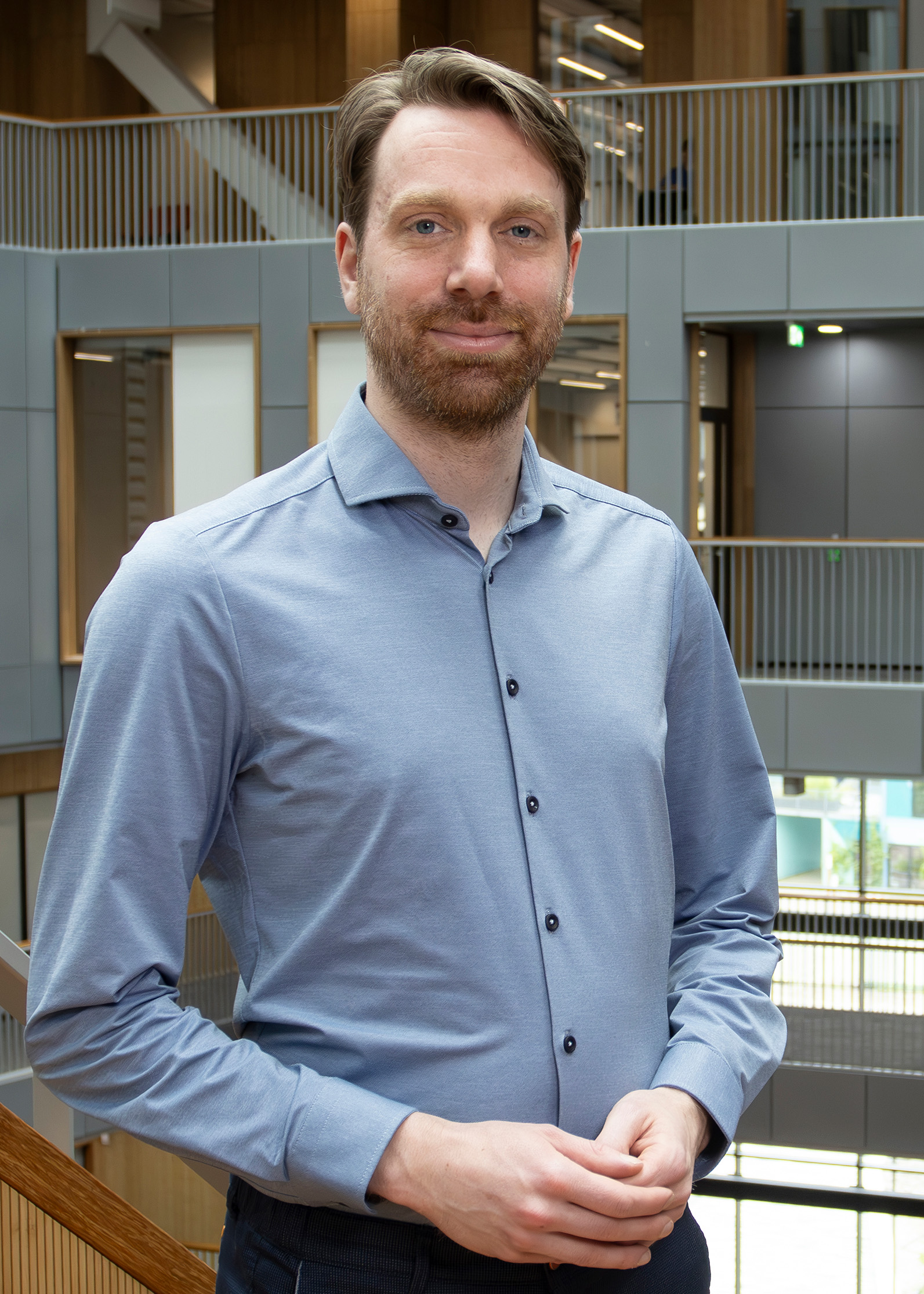
Mike Ligthart is an assistant professor in the Social AI research group at Vrije Universiteit Amsterdam. His research develops social robots that interact meaningfully with people over longer periods of time, and he works most closely with children and the adults who support them. Together with children, hospitals, schools, and libraries, he has co-developed robots that support children through invasive medical procedures, offer personalised mathematics education, and hold richer conversations about books to stimulate reading motivation. A second line of his work concerns people living with dementia and their caregivers, asking how a robot can act as a catalyst for social contact between someone with dementia and the people around them.

Three commitments run through this work. The first is participatory design: research and system development happen together with the communities the robot is meant to serve. The second is collaboration with artists and creative professionals, such as theatre-makers, dramaturgs, and writers, who bring craft to how interactions between people and robots are shaped. The third is the careful integration of artificial intelligence, used to personalise human-authored content rather than replace the expertise behind it.
Research

Ligthart's expertise lies in child-robot interaction, human-centred artificial intelligence, and participatory design. He is best known for his work on the child-robot relationship, and for showing that letting children co-create the interaction, e.g. by choosing their own stories, secret handshakes, and learning paths, is what makes a robot worth returning to. He develops hybrid agentic AI that combines the safety of rule-based systems with the creativity of generative AI, so that children, teachers, and artists can personalise content without ceding authorship to a machine. He translates these findings into reusable interaction design patterns and into open-source software: he leads the development of Nardial, a dialogue management library for narrative human-robot interaction, and co-leads the Social Interaction Cloud, a platform that lowers the barrier to building social robot applications that is currently being used in over a dozen projects.

Teaching

Ligthart teaches in the Bachelor's and Master's programmes in Artificial Intelligence at Vrije Universiteit Amsterdam. His signature course, Socially Intelligent Robotics, asks students to build social capabilities, such as dialogue management, conversation design, non-verbal expression, and visual social awareness on a humanoid robot, and then put them to the test on stage: groups of students create a short theatrical performance together in which the robot must improvise with human performers rather than follow a script. Theatre serves here as both sandbox and stress test, exposing students to the open-ended, unpredictable social situations that the lab tend to miss. In Robot Interaction he introduces bachelor's students to the fundamentals of HRI research, and in AI & Society he examines with master's students how artificial intelligence reshapes the social world it is deployed in.

His teaching covers:

  • Socially intelligent robotics and robot software development
  • Human-robot interaction design and evaluation
  • The societal and ethical implications of artificial intelligence
  • Bachelor's and Master's thesis supervision in Artificial Intelligence
Ancillary activities
  • Zelfstandig | Nieuwegein | Geven van lezingen masterclasses, en andere infotainment over sociale robots en kunstmatige intelligentie. | 2021-11-01 - present

Ancillary activities are updated daily

Quick links

Homepage VU Amsterdam Culture at VU Amsterdam University Library Dashboard

Study

Academic calendar Study Guide Timetable Canvas

Featured

Donate to the VU Fund VU Magazine Ad Valvas Digital accessibility

About VU Amsterdam

Contact with VU Amsterdam Take a look at our vacancies! Faculties VU Amsterdam Divisions VU Amsterdam
Privacy Disclaimer Safety Web Colophon Cookie settings Web Archive

Copyright © VU