Education Research Current About VU Amsterdam NL
Bachelor's programmes Master's programmes VU for Professionals
Exchange programme VU Amsterdam Summer School Honours Programme Dutch language courses (NT2) Semester in Amsterdam
PhD at VU Amsterdam Featured research Prizes and distinctions
Interdisciplinary research institutes Scientists of VU Amsterdam Research Impact Support Portal Create impact with your research
News Events calendar Moving towards a healthier future
VU UPDATE: Situation in Israel and the Palestinian regions Culture at VU Amsterdam
Practical matters Mission, core values and vision Entrepreneurship on VU Campus
Governance of VU Amsterdam Valorisation and impact Partnering with VU Amsterdam VU Alumni Community Take a look at our vacancies!
Sorry! De informatie die je zoekt, is enkel beschikbaar in het Engels.
This programme is saved in My Study Choice.
Something went wrong with processing the request.

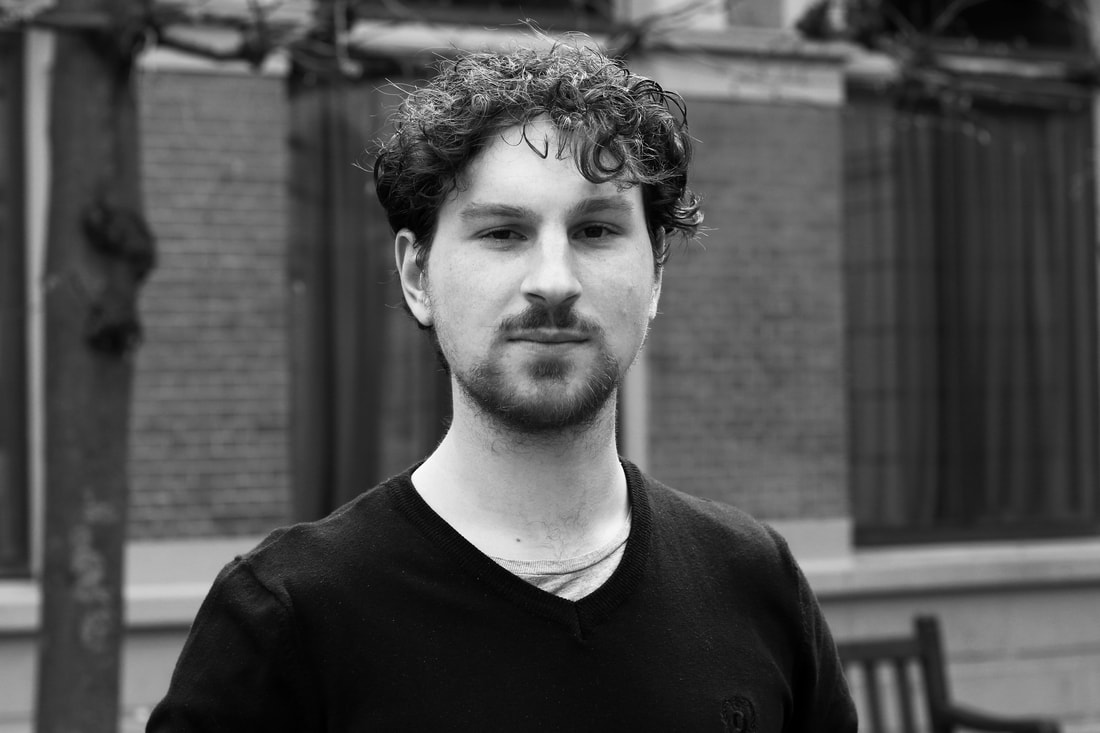
dr. Dániel Johannes Moerman

Visiting Fellow, Faculty of Social Sciences and Humanities, Art and Culture, History, Antiquity

Personal information

Dániel Moerman studied both history and philosophy at the University of Groningen, where in 2019 he completed his Research Master: Classical, Medieval and Early Modern Studies. His main research interests center around the early modern period (c.1500-1800), and focus particularly on social and cultural approaches to topics such as (cross)border and transregional history, conflict and warfare, illness and medicine, and science and philosophy. Currently he is working on his PhD dissertation within the project Coping with Drought: An Environmental History of Drinking Water and Climate Adaptation in the Netherlands, 1550-1850. In this project, supervised by prof. P.J.E.M. van Dam, he combines his knowledge of early modern social and cultural resilience in periods of crisis with an environmental and climatological approach to drinking water.  


Research

Project description: 

Drought as a result of human-induced climate change is an urgent challenge worldwide. This project investigates societal resilience to drought in coping with shortages of drinking water. In the Netherlands, before the introduction of piped water in the nineteenth century, the access to drinking water was highly flexible and adaptable. People procured water from multiple sources: groundwater, rainwater, and surface water. The research question is: in what ways did the practices and norms and values regarding the provisioning and use of drinking water develop in the Netherlands during the period 1550-1850, and how did they contribute to societal resilience to drought under differing environmental and social conditions? We make comparisons between dry and humid periods and investigate case-studies in two different regions: in the higher elevations of the Eastern Netherlands, with access to good ground water and surface water, and in the low-lying Western Netherlands, which depended on rain water, because ground water and surface water were brackish and polluted by industrial and human waste. The main aim of this project is to deepen knowledge about societal resilience to climate change. This cross-field project will be innovative, combining the environmental history subfields of weather-and-climate history and drinking water history. The method will allow identification of factors which contributed to societal resilience to drought over the long-term and make possible the exploration of drought as an agency in historical explanations. In addition, our historical imaginaries may inspire the general public and professionals to seek creative adaptations to climate change. 
Teaching

Course year 2019-2020 

- World History II 1800-present (fully digital course)

Course year 2021-2022

- Climate & Crisis: Past & Present (2nd year BA course) 

Ancillary activities

No ancillary activities

Ancillary activities are updated daily

Quick links

Homepage VU Amsterdam Culture at VU Amsterdam University Library Dashboard

Study

Academic calendar Study Guide Timetable Canvas

Featured

Donate to the VU Fund VU Magazine Ad Valvas Digital accessibility

About VU Amsterdam

Contact with VU Amsterdam Take a look at our vacancies! Faculties VU Amsterdam Divisions VU Amsterdam
Privacy Disclaimer Safety Web Colophon Cookie settings Web Archive

Copyright © VU