Education Research Current About VU Amsterdam NL
Bachelor's programmes Master's programmes VU for Professionals
Exchange programme VU Amsterdam Summer School Honours Programme Dutch language courses (NT2) Semester in Amsterdam
PhD at VU Amsterdam Featured research Prizes and distinctions
Interdisciplinary research institutes Scientists of VU Amsterdam Research Impact Support Portal Create impact with your research
News Events calendar Moving towards a healthier future
VU UPDATE: Situation in Israel and the Palestinian regions Culture at VU Amsterdam
Practical matters Mission, core values and vision Entrepreneurship on VU Campus
Governance of VU Amsterdam Valorisation and impact Partnering with VU Amsterdam VU Alumni Community Take a look at our vacancies!
Sorry! De informatie die je zoekt, is enkel beschikbaar in het Engels.
This programme is saved in My Study Choice.
Something went wrong with processing the request.

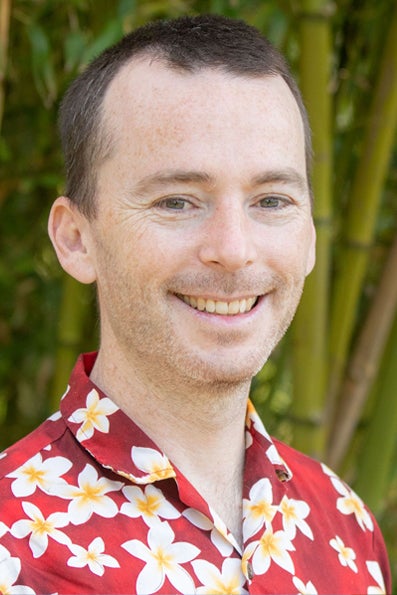
dr. Conor Mow-Lowry

Associate Professor, Faculty of Science, (Astro)-Particles Physics

Personal information

I am an Associate professor at the Vrije Unviersiteit Amsterdam and staff member at the Gravitational-wave group at Nikhef. My undergraduate degree and PhD were completed at the Australian National University, culminating in 2011. I spent 3 years at the Albert-Einstein-Institute in Hannover developing a suspended prototype interferometer before joining the University of Birmingham as a faculty member in 2015. In 2020 I received an ERC Consolidator grant and moved to the Netherlands to conduct the research at the VU and Nikhef.

Research

I am an instrumentalist. Gravitational-wave detectors sit at the forefront of precision instrumentation, and their operation presents a multitude of unique challenges. My main research focus is inertial sensing and seismic isolation. In particular, there are great opportunities in the application of laser-interferometers and novel materials that can reduce residual motion by more than a factor of 10 – like noise-cancelling headphones for seismic vibrations. If we realise such an isolation system it can become the baseline for the future Einstein Telescope, and may be fitted as an upgrade to the existing LIGO and Virgo detectors. Real gravitational-wave detectors have a multitude of different couplings between vibration and their main science measurements. It is my second major activity is modelling and understanding these noise couplings to help design the Einstein Telescope in a way that maximises our astrophysical reach.

Conor Mow-Lowry - (Astro-) Particle Physics - Department of Physics and Astronomy

Research Track record

Through a combination of R&D for future upgrades and direct commissioning efforts on-site, I have earned authorship on many gravitational-wave observation and instrumentation papers. My first contributions to the LIGO Scientific Collaboration were as an undergraduate prototyping novel interferometric sensing schemes and characterizing an optical spring. During my grad-student years I worked on many different aspects of detectors including the measurement of suspension thermal noise and the suppression of quantum noise. I briefly contributed to the Grace Follow-on mission developing an inter-satellite laser interferometer link.
Teaching

One of the hidden truths of academia is that becoming a scientist is an apprenticeship. Mentoring and training of students is one of my core duties, and also one of the most rewarding. A substantial fraction of my research time each week is devoted working with my graduate students. Undergraduate teaching is an area of university life that is in a state of flux as universities become more professional, with a greater focus on ensuring quality teaching. I have earned membership as a Fellow in the UK Higher Education Academy, with a focus on evidence-based reflective teaching. In my own classes I attempt to ensure engagement with the students, problem solving in class time, and encouraging peer instruction. I am a division chair of the Einstein Telescope instrument science board and I have numerous active international collaborations at the laboratory scale.

Ancillary activities

No ancillary activities

Ancillary activities are updated daily

Quick links

Homepage VU Amsterdam Culture at VU Amsterdam University Library Dashboard

Study

Academic calendar Study Guide Timetable Canvas

Featured

Donate to the VU Fund VU Magazine Ad Valvas Digital accessibility

About VU Amsterdam

Contact with VU Amsterdam Take a look at our vacancies! Faculties VU Amsterdam Divisions VU Amsterdam
Privacy Disclaimer Safety Web Colophon Cookie settings Web Archive

Copyright © VU