[See English below]
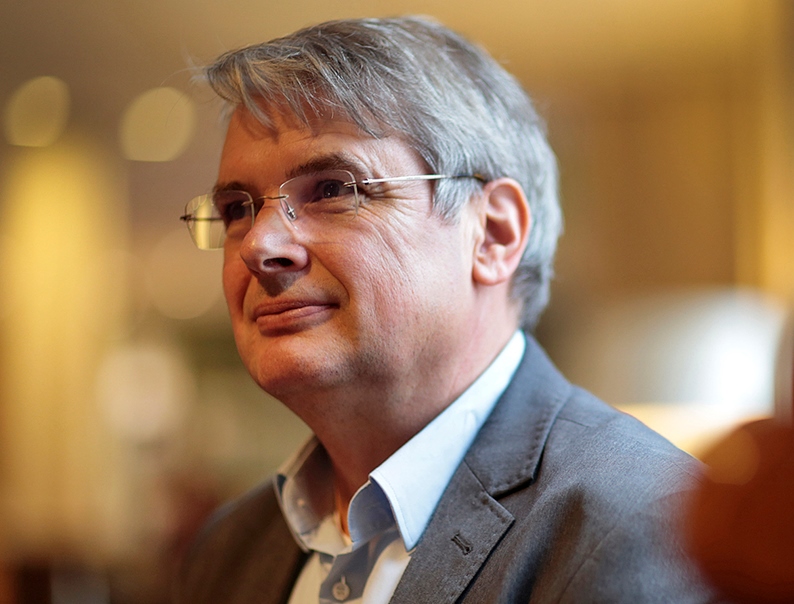
Arno Akkermans (1958) is emeritus hoogleraar Privaatrecht aan de Vrije Universiteit Amsterdam. Hij behaalde zijn doctoraal (cum laude) en promoveerde (cum laude) in de rechtsgeleerdheid aan Tilburg University. Hij was wetenschappelijk onderzoeker bij De Brauw Blackstone Westbroek in Den Haag (1992), advocaat bij Kennedy Van der Laan in Amsterdam (1996–1999) en raadsheer-plaatsvervanger bij het Gerechtshof Amsterdam (2015–2019).
Sinds zijn benoeming aan de VU in 1999 heeft hij aan de wieg gestaan van vernieuwende initiatieven op het gebied van interdisciplinaire samenwerking, empirical legal studies (ELS) en de responsiviteit van het recht. Zo was hij medeoprichter van de Interdisciplinaire Werkgroep Medische Deskundigen (IWMD), het International Network on Apology and Law Research (INLAR), het Leernetwerk OPEN in de zorg, de Netherlands Academy of Empirical Legal Studies (ELS Academy), de European Society of Empirical Legal Studies (ESELS), en het European Journal of Empirical Legal Studies (EJELS). Hij was directeur van het Amsterdam Law and Behavior Institute (A-LAB), programmaleider van het Amsterdam Centre for Comprehensive Law (ACCL) en bestuurslid van het Nederlands Studiecentrum Criminaliteit en Rechtshandhaving (NSCR).
Zijn wetenschappelijke werk heeft een merkbare invloed op de rechtsontwikkeling gehad. De Hoge Raad volgde zijn oratie De omkeringsregel bij het bewijs van causaal verband in 2002 (HR 29 november 2002, ECLI:NL:HR:2002:AE7345 en AE7351) en zijn proefschrift Proportionele aansprakelijkheid bij onzeker causaal verband in 2017 (HR 31 maart 2006, ECLI:NL:HR:2006:AU6092). De onder zijn leiding ontwikkelde IWMD-vraagstelling Causaal verband bij ongeval groeide uit tot de standaardvraagstelling voor onafhankelijke deskundigen met betrekking tot de vraag wat in een bepaalde letselschadezaak als de gevolgen van een ongeval moet worden beschouwd. Het onder zijn leiding verrichte WODC-onderzoek Slachtoffers en aansprakelijkheid uit 2007-2008 wordt wel gezien als het startpunt voor de toegenomen aandacht voor de immateriële gerechtigheidsbelangen van letselschadeslachtoffers.
Een rode draad in zijn werk is de verbetering van de positie van slachtoffers van letselschade, zowel door wetenschappelijk onderzoek als door functies bij, of samenwerking met, maatschappelijke organisaties zoals Slachtofferhulp Nederland, het Schadefonds Geweldsmisdrijven, het Platform Personenschade, De Letselschade Raad en de Stichting Vliegramp MH17. Ook zette hij zich in voor het mainstreamen van ELS in de rechtswetenschap, voor de integratie van methoden en vaardigheden van consensuele conflictoplossing in het juridisch onderwijs, als tegenhanger van het klassieke, adversariële juridische strijdmodel, en voor Restorative tort law. Deze lijnen bracht hij samen in zijn afscheidsrede aan de VU in 2026: Naar een responsief aansprakelijkheidsrecht.
Sinds zijn emeritaat zet hij zich in voor collectieve acties van burgers en consumenten tegen grote multinationals en Big Tech, en voor de belangen van milieu en klimaat.
Arno Akkermans (1958) is Emeritus Professor of Private Law at Vrije Universiteit Amsterdam. He completed his Master's degree (cum laude) and PhD (cum laude) in law at Tilburg University. He worked as a researcher at De Brauw Blackstone Westbroek in The Hague (1992), as a lawyer at Kennedy Van der Laan in Amsterdam (1996–1999) and as a deputy judge at the Amsterdam Court of Appeal (2015–2019).
Since his appointment at VU Amsterdam in 1999, he has been instrumental in launching innovative initiatives in the fields of interdisciplinary collaboration, empirical legal studies (ELS) and the responsiveness of the law. He co-founded the Interdisciplinary Working Group on Medical Experts (IWMD), the International Network on Apology and Law Research (INLAR), the OPEN Learning Network in healthcare (Leernetwerk OPEN in de zorg), the Netherlands Academy of Empirical Legal Studies (ELS Academy), the European Society of Empirical Legal Studies (ESELS), and the European Journal of Empirical Legal Studies (EJELS). He was director of the Amsterdam Law and Behavior Institute (A-LAB), programme director of the Amsterdam Centre for Comprehensive Law (ACCL) and a board member of the Netherlands Institute for the Study of Crime and Law Enforcement (NSCR).
His scholarship has had a demonstrable influence on the development of Dutch law. The Supreme Court of the Netherlands followed his inaugural lecture, De omkeringsregel bij het bewijs van causaal verband (The reversal rule in the proof of causation), in 2002 (HR 29 November 2002, ECLI:NL:HR:2002:AE7345 and AE7351), and his doctoral thesis, Proportionele aansprakelijkheid bij onzeker causaal verband (Proportional liability in cases of uncertain causation), in 2006 (HR 31 March 2006, ECLI:NL:HR:2006:AU6092). The IWMD questionnaire on causation in accident cases (IWMD-vraagstelling Causaal verband bij ongeval), developed under his leadership, became the standard set of questions put to independent medical experts on what should be regarded as the consequences of an accident in a personal injury case. The research project Victims and Liability (Slachtoffers en aansprakelijkheid, 2007–2008), which he led for the Research and Documentation Centre of the Dutch Ministry of Justice (WODC), is often regarded as the starting point of the growing attention to the non-financial justice needs of personal injury victims.
A recurring theme in his work is improving the position of personal injury victims, both through academic research and through roles at, or collaboration with, civil society organisations such as Victim Support Netherlands, the Violent Offences Compensation Fund, the Dutch Personal Injury Platform (Platform Personenschade), the Personal Injury Council (De Letselschade Raad) and the MH17 Disaster Foundation. He has also championed the mainstreaming of ELS in legal scholarship, the integration of consensual conflict resolution methods and skills into legal education, as a counterpart to the traditional adversarial model of legal dispute resolution, and Restorative tort law. He brought these strands together in his valedictory lecture at VU Amsterdam in 2026: Naar een responsief aansprakelijkheidsrecht (Towards Responsive Tort Law).
Since his retirement, he has been committed to collective action by citizens and consumers against large multinationals and Big Tech, and to environmental and climate causes.